Have you ever wondered why a simple Thai omelette looks so incredibly crispy and fluffy at the same time? The secret isn’t expensive ingredients or complicated cooking techniques. It’s all about one surprising cooking method that transforms two ordinary eggs into one of Thailand’s most beloved comfort foods.
The first time I made Thai Kai Jeow, I honestly thought I had done something wrong. Watching the eggs dramatically puff up in the hot oil was both exciting and a little intimidating. But after that first crispy bite with soft, fluffy eggs inside, I finally understood why this humble dish is served everywhere in Thailand, from busy street food stalls to family kitchens.
This recipe is one of my favorite omelet variations. While it starts with the same simple ingredients as many classic omelets, its unique cooking method and flavor create a completely different breakfast experience. It’s an easy way to enjoy something familiar with a fresh twist, making it one of my go-to breakfasts whenever I want a change from my usual routine.
If you’re looking for a quick breakfast that feels special without spending hours in the kitchen, this authentic Thai Kai Jeow recipe deserves a spot on your weekly menu.
What is Thai Kai Jeow?
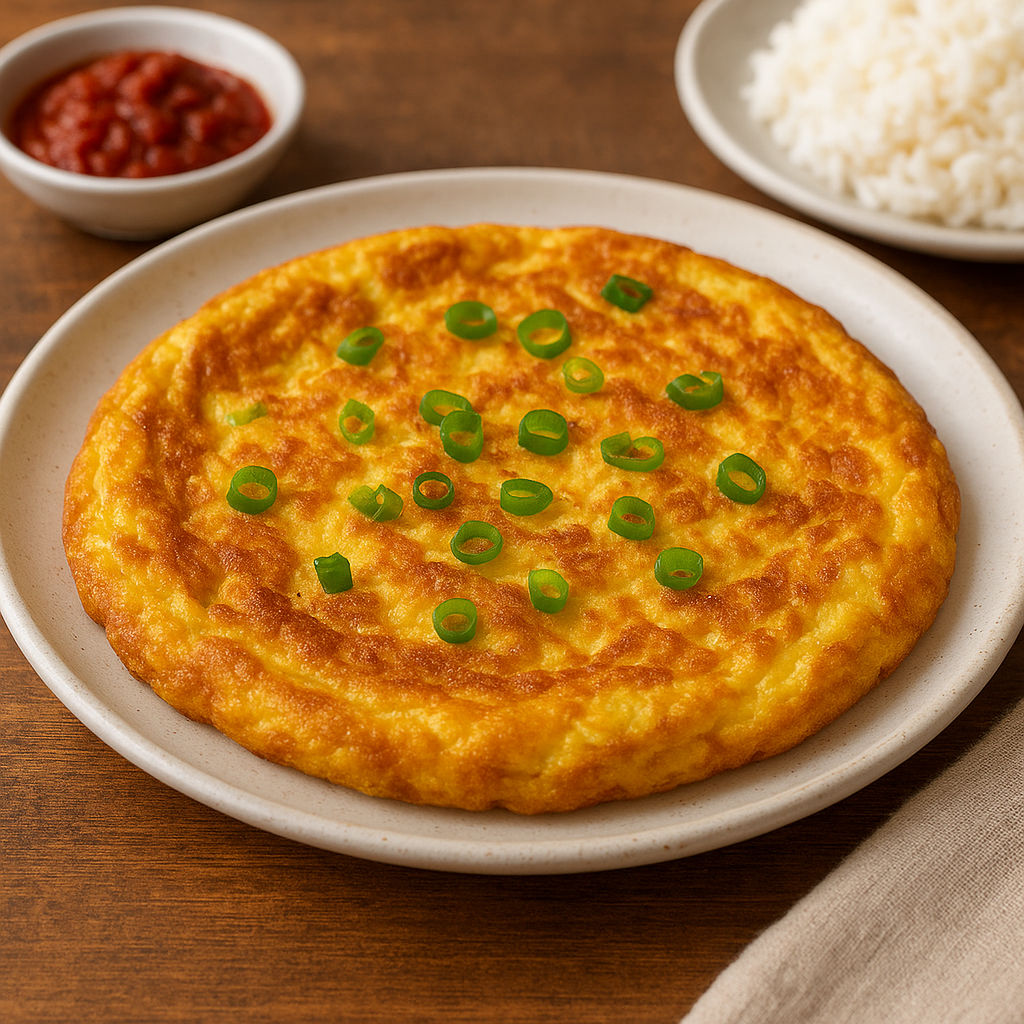
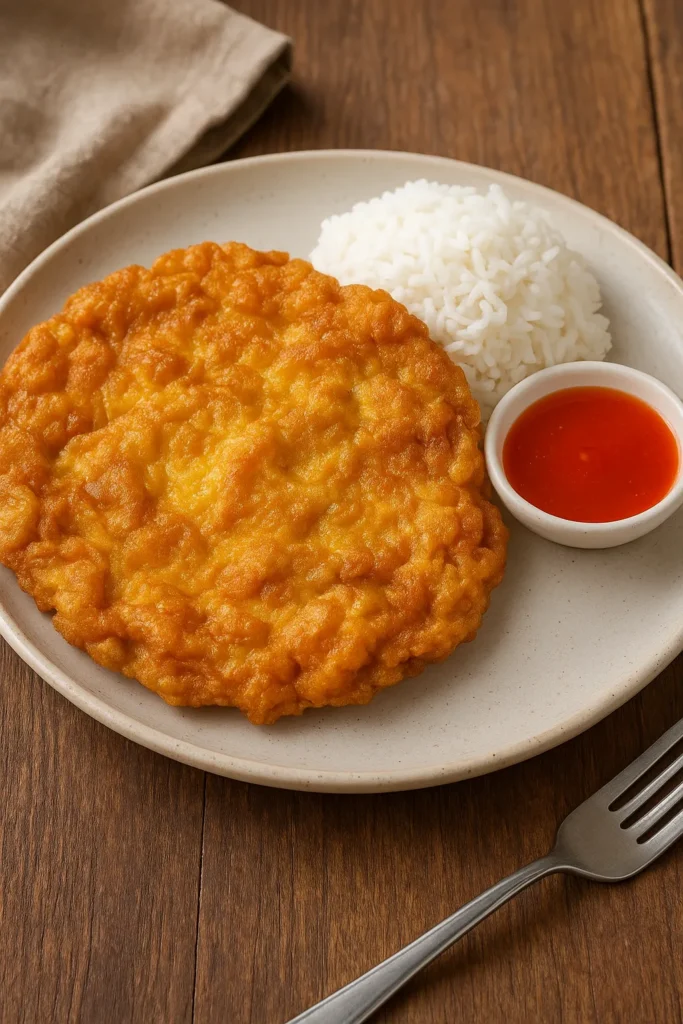
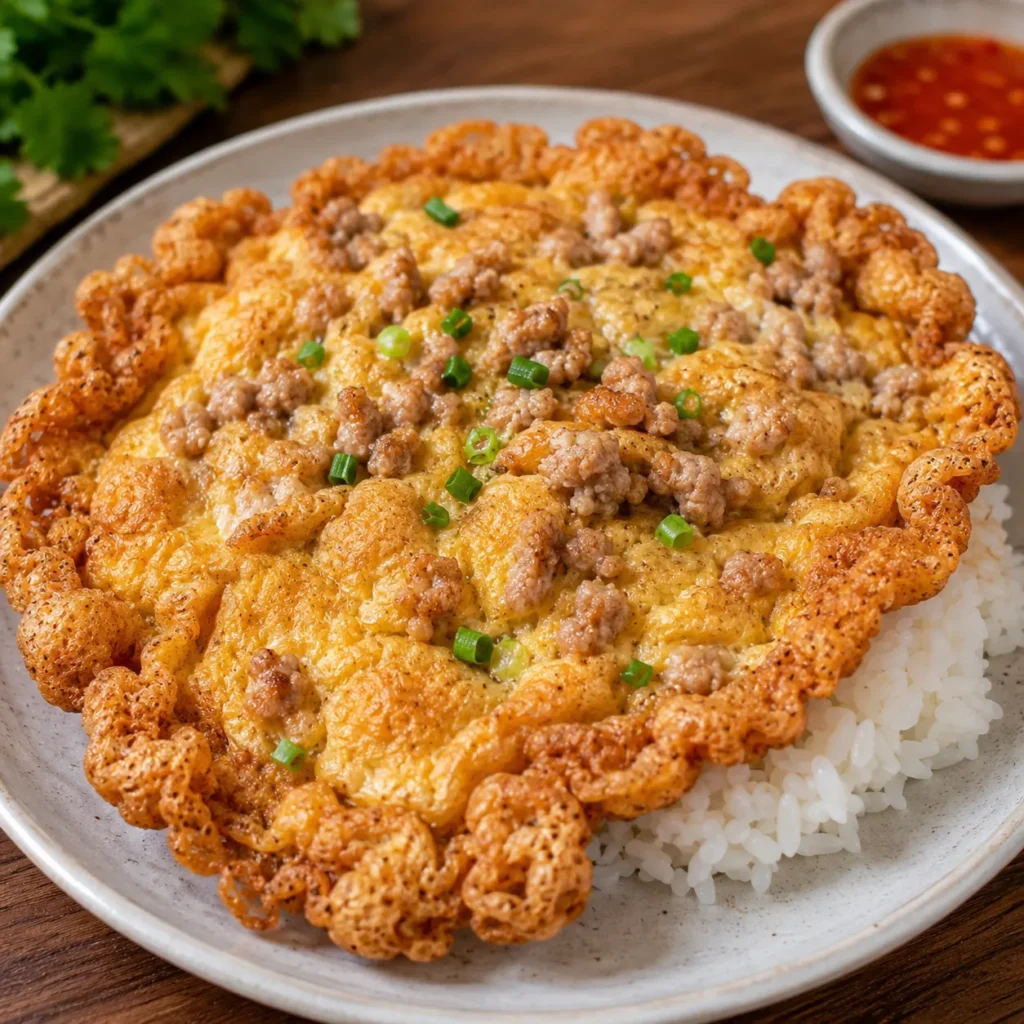
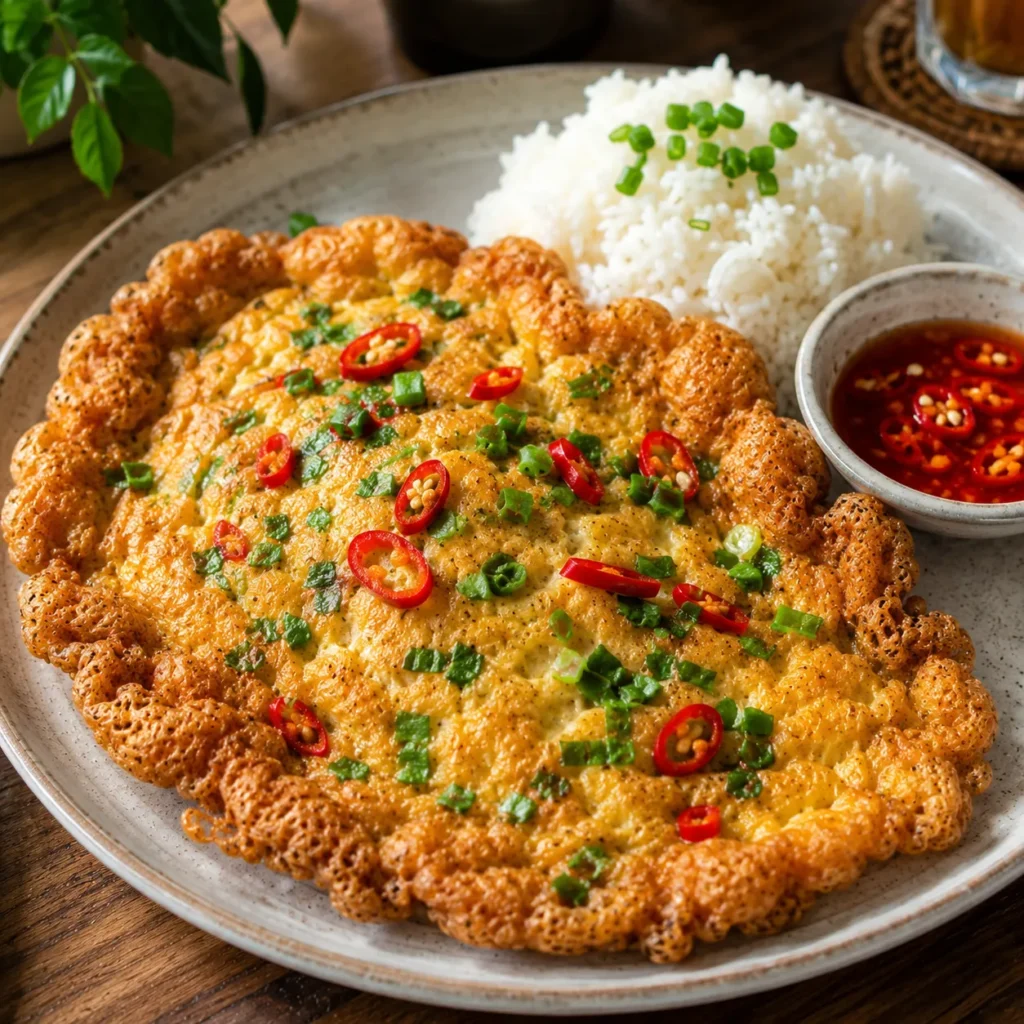
Thai Kai Jeow (ไข่เจียว) is Thailand’s famous deep-fried omelette known for its crispy golden edges and soft, airy center. Unlike traditional Western omelettes that are cooked gently in butter, Kai Jeow is made by pouring beaten eggs into very hot oil, creating dramatic bubbles and a beautifully puffed texture.
Although it only uses a handful of ingredients, this dish has become one of Thailand’s ultimate comfort foods. Locals often enjoy it over steamed jasmine rice with a drizzle of Sriracha or Thai chili sauce.
Its popularity comes from how incredibly simple, affordable, and satisfying it is. Whether you’re making breakfast, lunch, or even a late-night meal, Kai Jeow is always a delicious choice.
Why You Should Try This Recipe
There are countless omelette recipes online, but Thai Kai Jeow offers something completely different.
Instead of a flat egg dish, you’ll create an omelette with crispy, lacy edges and a soft, fluffy center. Every bite delivers a satisfying contrast of textures that keeps people coming back for more.
It’s also one of the easiest international recipes to master. You don’t need advanced cooking skills or hard-to-find ingredients. In less than 10 minutes, you can prepare a restaurant-style Thai breakfast right at home.
Whether you’re a busy student, working professional, or beginner cook, this recipe fits perfectly into your daily routine.
Why You’ll Love This Recipe
- Ready in only 10 minutes
- Beginner-friendly with simple ingredients
- Crispy outside, fluffy inside
- Authentic Thai street food flavor
- Budget-friendly recipe
- Perfect for breakfast, lunch, or dinner
- Easily customizable with your favorite add-ins
- Great comfort food for busy weekdays
Ingredients
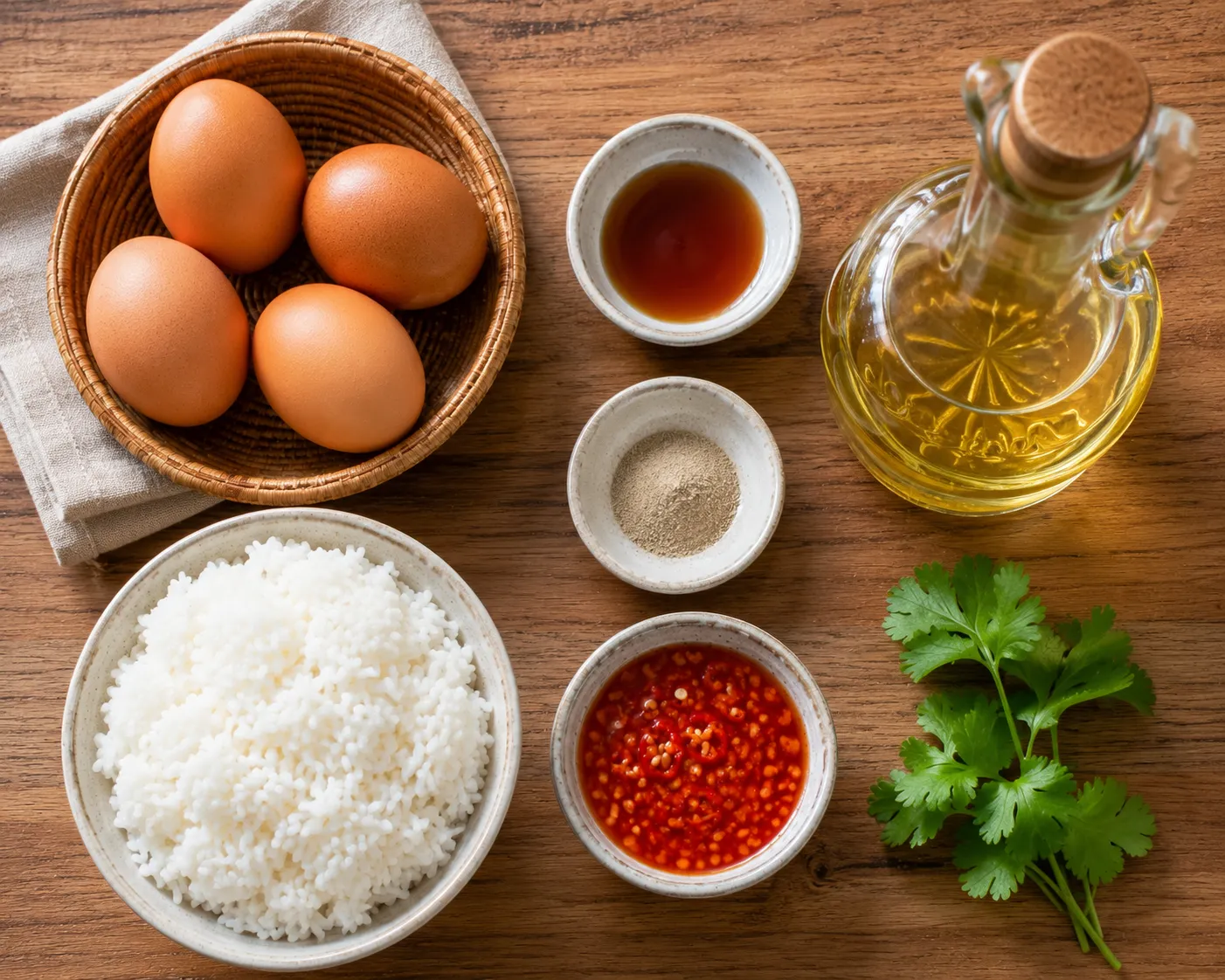
| Ingredient | Amount | Notes |
|---|---|---|
| Large eggs | 2 | Room temperature works best |
| Fish sauce | 1 teaspoon | Soy sauce can be substituted |
| White pepper | ¼ teaspoon | Freshly ground if possible |
| Water | 1 tablespoon | Helps create fluffier eggs |
| Vegetable oil | 1 cup | For deep frying |
| Cooked jasmine rice | For serving | Traditional accompaniment |
| Sriracha or Thai chili sauce | Optional | For extra heat |
Optional Add-ins
- Minced pork
- Chopped green onions
- Fresh cilantro
- Diced onions
- Red chilies
- Cooked shrimp
Tools
- Mixing bowl
- Fork or whisk
- Wok or deep frying pan
- Ladle or spatula
- Paper towels
- Serving plate
How To Make it Step by Step
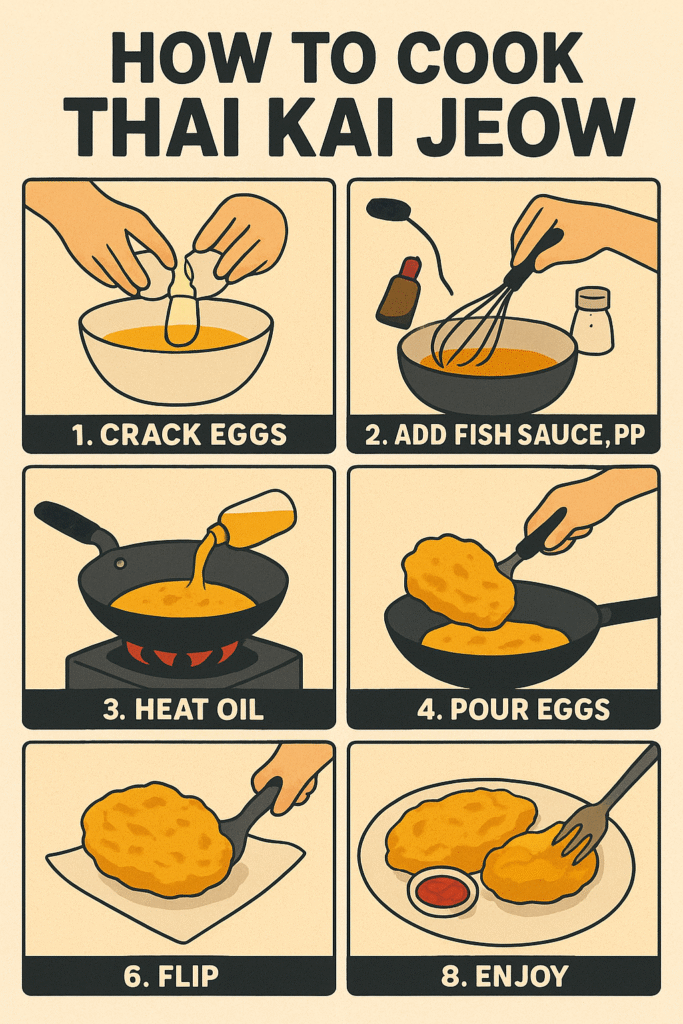
Step 1: Prepare the Egg Mixture
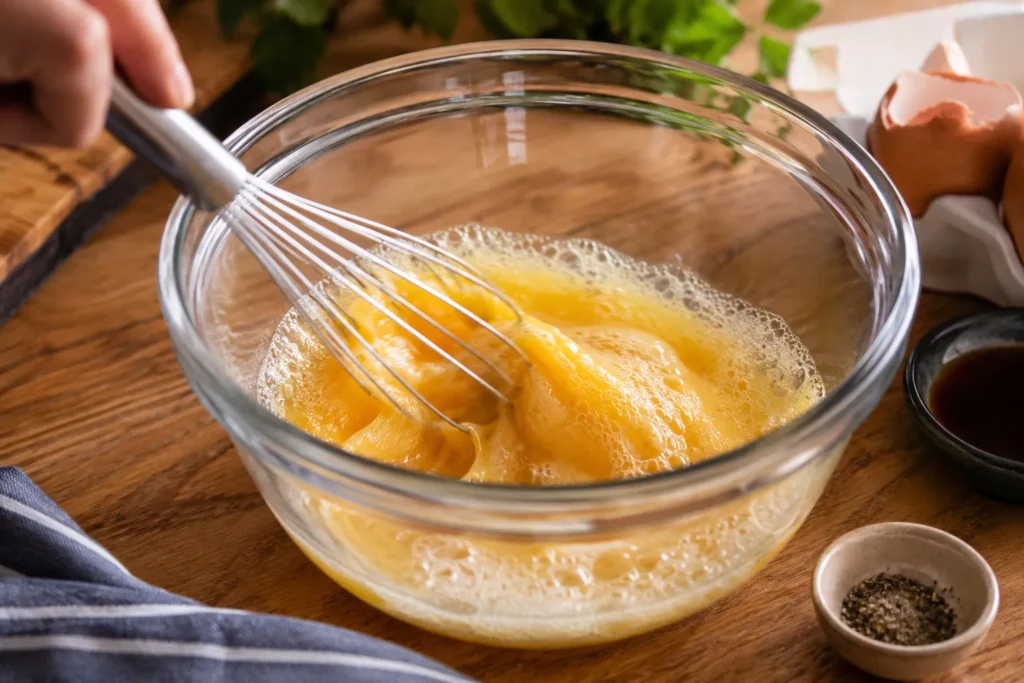
- Crack the eggs into a medium mixing bowl. Add the fish sauce, white pepper, and water.
- Whisk the mixture vigorously for about one minute until it becomes light, airy, and filled with tiny bubbles.
The more air you incorporate, the puffier your omelette will become during cooking.
Step 2: Heat the Oil Properly
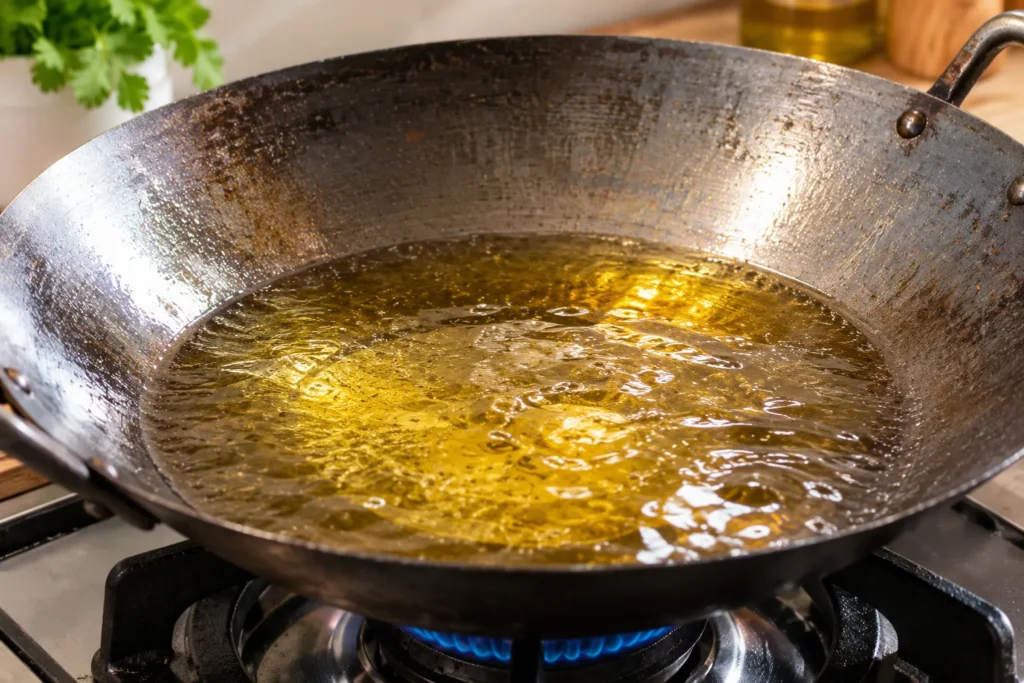
- Pour the vegetable oil into a wok or deep frying pan.
- Heat it over medium-high heat until it becomes very hot but not smoking.
- A simple test is to drip a tiny amount of egg into the oil. If it immediately sizzles and floats to the surface, the oil is ready.
Using hot oil is the most important secret behind authentic Thai Kai Jeow.
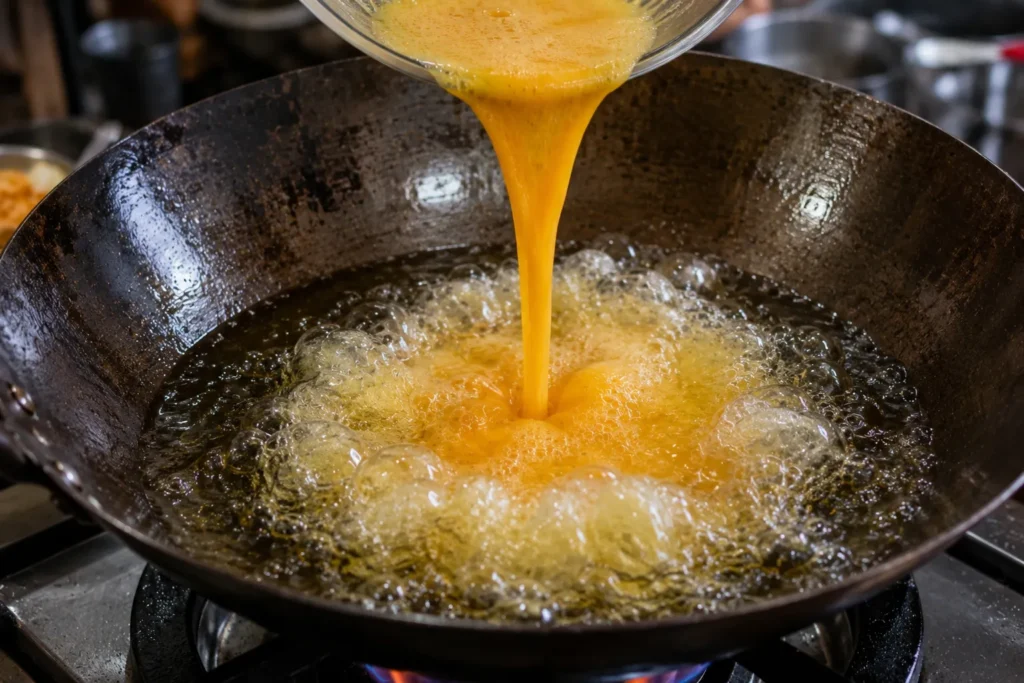
Step 3: Pour from Above
- Carefully pour the egg mixture into the center of the wok from approximately 8 inches (20 cm) above the oil.
This technique helps create dramatic bubbles and allows the omelette to expand instantly.
Don’t worry if it looks oversized at first. That’s exactly what you want.
Step 4: Cook Until Crispy
- Allow the omelette to cook undisturbed for about 20 to 30 seconds.
The edges will turn deep golden brown while the center continues puffing upward.
Avoid moving it too early because this can prevent the crispy crust from forming.


Step 5: Flip Gently
- Using a spatula or ladle, carefully flip the omelette.
- Cook the second side for another 15 to 20 seconds until lightly golden.
Since the omelette is already mostly cooked, the second side requires much less time.
Step 6: Drain and Serve
- Transfer the cooked omelette onto paper towels to remove excess oil.
- Serve immediately over warm jasmine rice with Sriracha or Thai chili sauce.
- For extra freshness, garnish with chopped green onions or cilantro if desired.
The best Thai Kai Jeow should have a crispy exterior that crackles with every bite while remaining soft, tender, and fluffy inside.

Pro Tips
Making Thai Kai Jeow is surprisingly simple, but a few small details can make the difference between a good omelette and one that tastes like it came from a Thai street food stall.
- Use Very Hot Oil: The signature crispy texture comes from pouring the eggs into hot oil. If the oil isn’t hot enough, the omelette will absorb too much oil and become greasy instead of crispy.
- Whisk Until Frothy: Don’t stop whisking after everything is combined. Continue until the eggs are filled with tiny bubbles. The trapped air helps create the fluffy interior.
- Pour from a Height: Pouring the egg mixture from about 8 inches (20 cm) above the wok helps create dramatic bubbles and gives the omelette its iconic puffy appearance.
- Don’t Overcook: Kai Jeow cooks incredibly fast. Leaving it in the oil too long can dry out the inside. The perfect omelette has crispy edges with a moist, tender center.
- Drain Before Serving: Place the cooked omelette on paper towels for about a minute. This removes excess oil while keeping the crispy texture intact.
Variations
One of the best things about Thai Kai Jeow is how easy it is to customize.
- Green Onion Kai Jeow: Add chopped green onions for extra freshness and color.
- Spicy Thai Omelette: Mix sliced Thai chilies into the eggs if you enjoy spicy food.
- Shrimp Kai Jeow: Small cooked shrimp add delicious seafood flavor while keeping the recipe light.
- Vegetarian Version: Replace fish sauce with soy sauce and add mushrooms, diced onions, or bell peppers.
What to Serve with Thai Kai Jeow
Although delicious on its own, Thai Kai Jeow becomes a complete meal when paired with a few simple sides.
Some popular serving ideas include:
- Steamed jasmine rice
- Fresh cucumber slices
- Thai sweet chili sauce
- Sriracha sauce
- Pickled vegetables
- Clear vegetable soup
- Fresh herbs like cilantro or Thai basil
For breakfast, many people simply enjoy Kai Jeow over hot rice with a little chili sauce. It’s quick, comforting, and incredibly satisfying.
Nutrition Value
The nutrition values below are estimates for one serving (without rice).
| Nutrient | Amount |
|---|---|
| Calories | 320 kcal |
| Protein | 13 g |
| Total Fat | 29 g |
| Saturated Fat | 6 g |
| Carbohydrates | 2 g |
| Sugar | 1 g |
| Fiber | 0 g |
| Sodium | 520 mg |
| Cholesterol | 370 mg |
Note: Nutrition values may vary depending on the oil used, serving size, and any optional ingredients.
FAQs
Why didn’t my omelette puff up?
The most common reason is that the oil wasn’t hot enough. Also, make sure to whisk the eggs until they become frothy before frying.
Can I use soy sauce instead of fish sauce?
Yes. Soy sauce works well if you prefer a vegetarian-friendly option or don’t have fish sauce available. The flavor will be slightly different but still delicious.
Can I use an air fryer?
No. The signature crispy texture comes from deep-frying in very hot oil. An air fryer won’t produce the same result.
Is Thai Kai Jeow healthy?
Like many fried dishes, it’s best enjoyed in moderation. Pairing it with steamed rice and fresh vegetables creates a more balanced meal.
What oil works best?
Neutral oils with high smoke points, such as vegetable, canola, or peanut oil, are ideal.
Common Mistakes
Avoid these beginner mistakes for the best results.
- Using Oil That’s Too Cool: Cool oil leads to soggy, greasy eggs instead of crispy edges.
- Not Whisking Enough: Without enough air in the eggs, the omelette won’t puff up properly.
- Overcrowding the Pan: A smaller pan with too much egg mixture prevents the omelette from expanding.
- Cooking Too Long: Overcooking removes the soft, fluffy center that makes Kai Jeow special.
- Skipping the Paper Towel: Draining the omelette keeps it crisp and prevents excess oil from affecting the texture.
How to Store
Although Thai Kai Jeow is best eaten fresh, leftovers can still be enjoyed later.
- Refrigerator: Store in an airtight container for up to 2 days.
- Freezer: Freezing is not recommended because it affects the crispy texture.
- Reheating: Reheat in an air fryer, oven, or skillet for a few minutes until warm. Avoid using the microwave if possible, as it softens the crispy edges.

Final Thoughts
Thai Kai Jeow proves that simple recipes can deliver unforgettable flavor. With only a few pantry ingredients and less than 10 minutes of cooking time, you can enjoy one of Thailand’s most iconic comfort foods at home.
What makes this recipe so special isn’t just the crispy golden exterior or the fluffy center. It’s the way such a humble dish brings warmth and satisfaction to the table, whether you’re making breakfast before work or preparing a quick dinner after a busy day.
The first time I made this recipe for my family was when I returned home after being away for a while. I woke up early, hoping to help my mom prepare breakfast, and found everything I needed in the refrigerator. Since the ingredients were so simple, I decided to make Thai Kai Jeow for everyone.
Their reactions made all the effort worthwhile. After the first bite, they looked surprised and said, “This tastes different from a regular omelet. It’s crispy on the outside, soft and fluffy on the inside, and even more flavorful.” Hearing that made me incredibly happy. Knowing my family enjoyed something I had cooked with love is one of the reasons this recipe has become so special to me.
Once you’ve mastered the basic recipe, don’t hesitate to experiment with your favorite fillings and toppings. Every version has its own charm, making Thai Kai Jeow a recipe you’ll come back to again and again.
Did you make this authentic Thai Kai Jeow?
I’d love to hear how it turned out!
Leave a comment below and share your favorite variation or any tips you discovered while cooking. If you enjoyed this recipe, don’t forget to rate it and share it with your friends and family on Pinterest, Facebook, or your favorite social platform. Every share helps more home cooks discover this delicious Thai classic!
Happy cooking! 🍳
Asian bread Breakfast cake Cheese Cold Dessert Detox Diet Dinner Drinks Easy food Halal Healthy homemade hot Indonesian Italian Japanese K-Food Low Calory Meal Noodle Omelette Pasta Popular Ramen Simple snacks Soup Street Food Sweet Thai Tiktok viral