
A Little Indonesian Cake That Deserves More Attention
Some Indonesian snacks don’t need a fancy bakery display to make you stop and take a bite.
Putu Ayu is one of them.
I still love the little moment when you lift a Putu Ayu from its mold and see that soft green cake sitting neatly on top of a layer of grated coconut. The pandan aroma comes first, then the slightly sweet coconut, and finally that fluffy texture.
It feels simple. Almost too simple.
But that’s exactly the charm.
I first discovered putu ayu as a child when my grandmother took me to the traditional market to buy some local snacks. Among all the colorful treats on display, one little green cake immediately caught my attention. It was shaped almost like a tiny doughnut and topped with a layer of grated white coconut. As a child, I thought the coconut looked like little bits of snow, so I simply called it “snow cake.” I didn’t know much about putu ayu back then, but I knew one thing for sure: it looked too tempting to leave behind.
Putu Ayu is a traditional Indonesian steamed cake that you can find at traditional markets, snack boxes, family gatherings, and small neighborhood food stalls. And while it may look like something that requires years of baking experience, it is actually surprisingly beginner-friendly.
No oven. No complicated decoration. No expensive ingredients.
Just a fluffy pandan cake, fragrant coconut, and a steamer.
If you’re discovering Indonesian food for the first time, this is a pretty delicious place to start.
What is Putu Ayu?
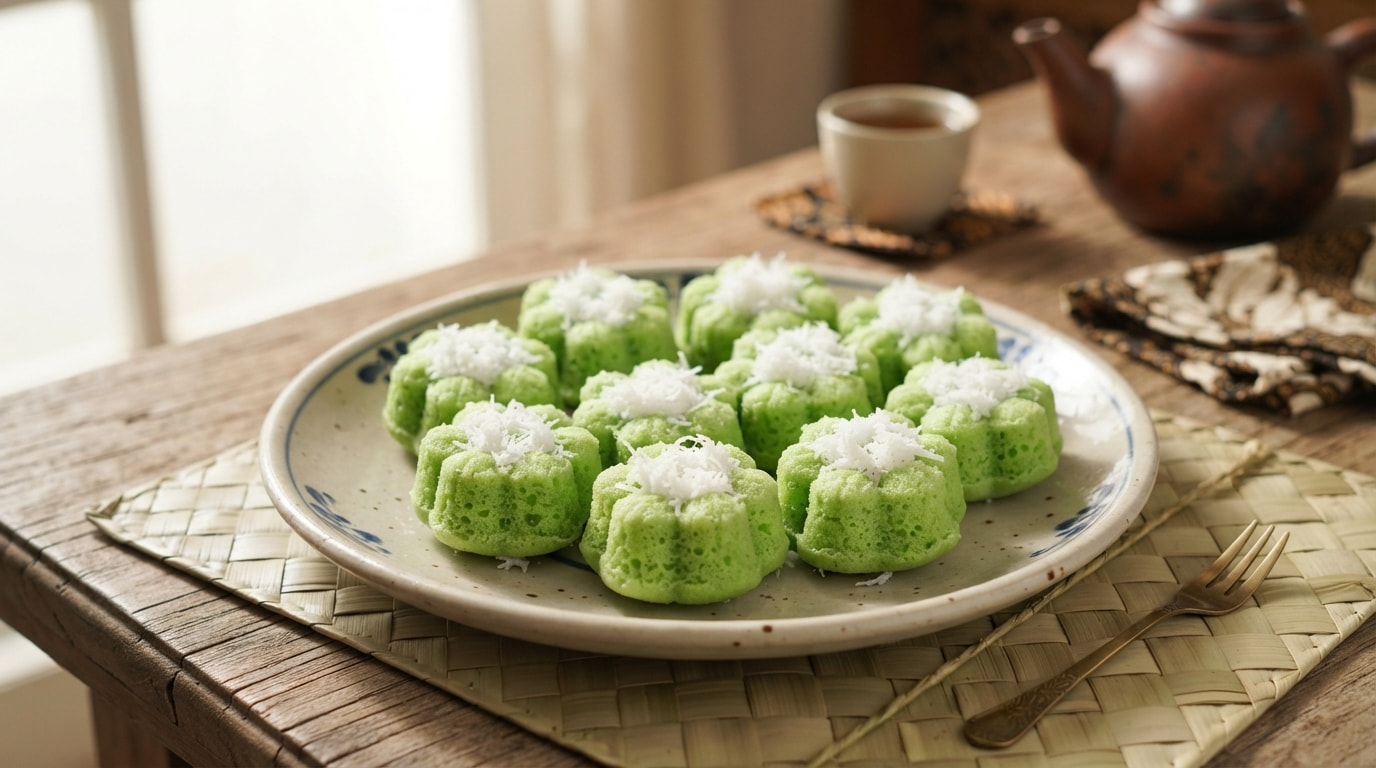
Putu Ayu is a traditional Indonesian steamed cake made from a light, fluffy batter flavored with pandan and usually paired with freshly grated coconut.
Unlike many Western cakes, Putu Ayu is steamed instead of baked. The result is a soft, moist texture with a fresh pandan aroma that makes the cake instantly recognizable.
The name Putu Ayu is often associated with its beautiful appearance. Ayu means beautiful in Indonesian, which makes sense when you see these small green cakes sitting neatly in their flower-shaped molds.
The classic version usually has two layers:
- Grated coconut on the bottom
- Soft pandan cake on top
When the cake is removed from the mold, the coconut becomes the pretty little crown.
That combination is what makes Putu Ayu special. The cake is sweet and fragrant, while the coconut adds a slightly salty, creamy contrast.
Why You Should Try Putu Ayu?
If you’re looking for an Indonesian recipe that feels exotic without requiring hard-to-find ingredients, Putu Ayu is a great choice.
Here are a few reasons to put it on your recipe list:
- No oven required: Everything happens inside a steamer, making this recipe perfect for kitchens without an oven.
- Simple ingredients: Most of the ingredients are basic pantry staples such as eggs, sugar, flour, coconut milk, and shredded coconut.
- Naturally beautiful:That bright pandan-green color and flower-shaped mold already give the cake plenty of personality.
- Great introduction to Indonesian desserts: If you’re new to Indonesian food, Putu Ayu gives you a gentle introduction to the country’s love of coconut, pandan, and steamed cakes.
- Perfect for sharing: These small cakes are easy to portion and serve at breakfast, afternoon tea, parties, or family gatherings.
And honestly, they look adorable on a serving plate.
Why You’ll Love This Recipe
- Soft, fluffy texture. The steamed batter creates a tender cake that doesn’t feel heavy.
- Fragrant pandan flavor. Pandan gives Putu Ayu its signature aroma and subtle sweetness.
- Creamy coconut contrast. The grated coconut adds texture and a lightly savory note.
- Beginner-friendly. You don’t need advanced baking skills to make this recipe.
- Small and snack-able. One Putu Ayu is just enough for a quick sweet bite, although stopping at one can be a different story.

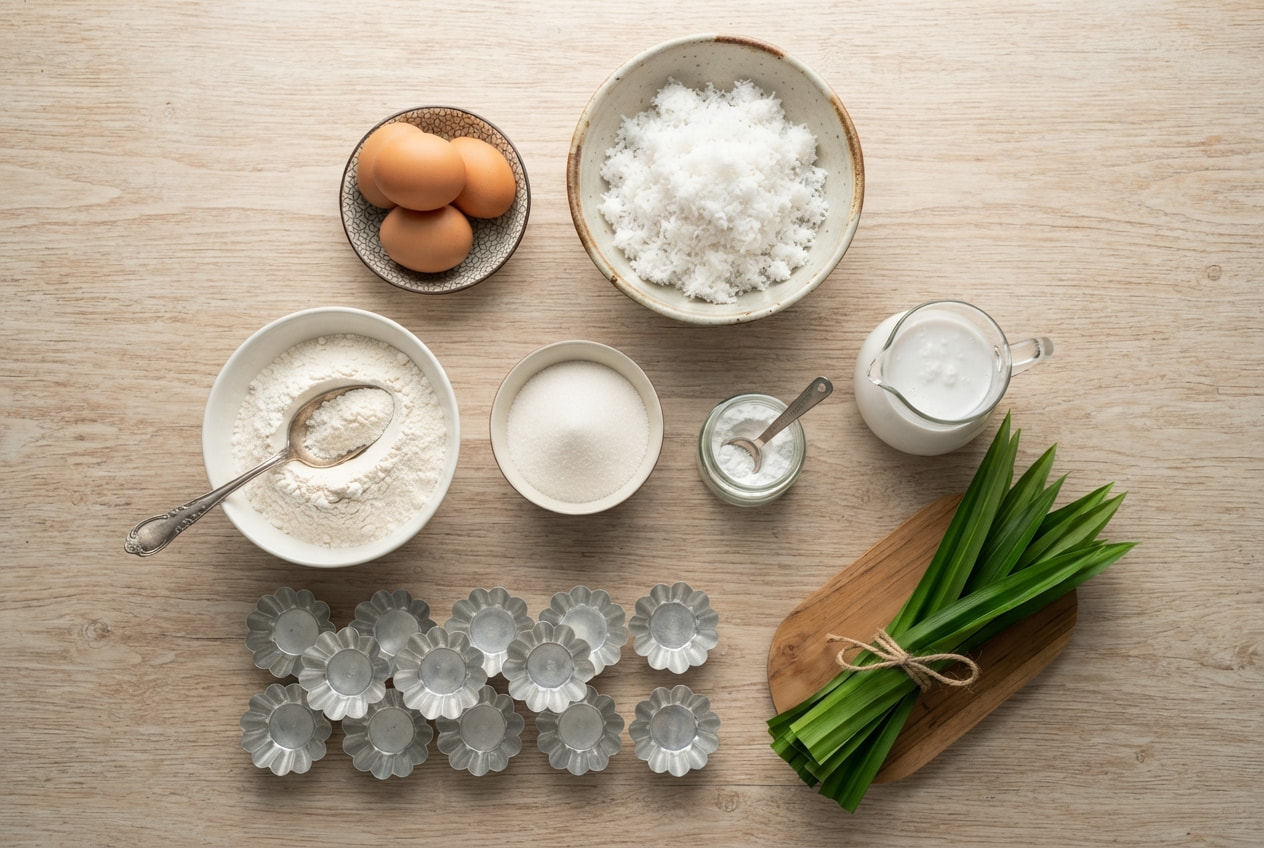
Ingredients
- For the coconut topping:
- 150 g freshly grated coconut
- ¼ teaspoon salt
- 1 tablespoon cornstarch
- For the pandan cake:
- 2 large eggs
- 100 g granulated sugar
- ½ teaspoon vanilla extract
- 100 g all-purpose flour
- ½ teaspoon baking powder
- 100 ml coconut milk
- 1 tablespoon pandan juice or pandan extract
- 1 tablespoon vegetable oil
Ingredient Notes
- Grated coconut: Fresh coconut gives the best flavor and texture. If fresh coconut isn’t available, unsweetened desiccated coconut can work as an alternative.
- Pandan: Fresh pandan juice gives the most natural flavor and color. Pandan extract is easier to find internationally and works well for beginners.
- Coconut milk: Use full-fat coconut milk for a richer and more fragrant cake.
- Cornstarch: A small amount helps the grated coconut hold together better during steaming.
Tools
- Putu Ayu or small flower-shaped molds
- Steamer
- Mixing bowl
- Hand mixer or whisk
- Fine sieve
- Small spoon
- Pastry brush
- Cooling rack
How To Make Putu Ayu Step-by-Step
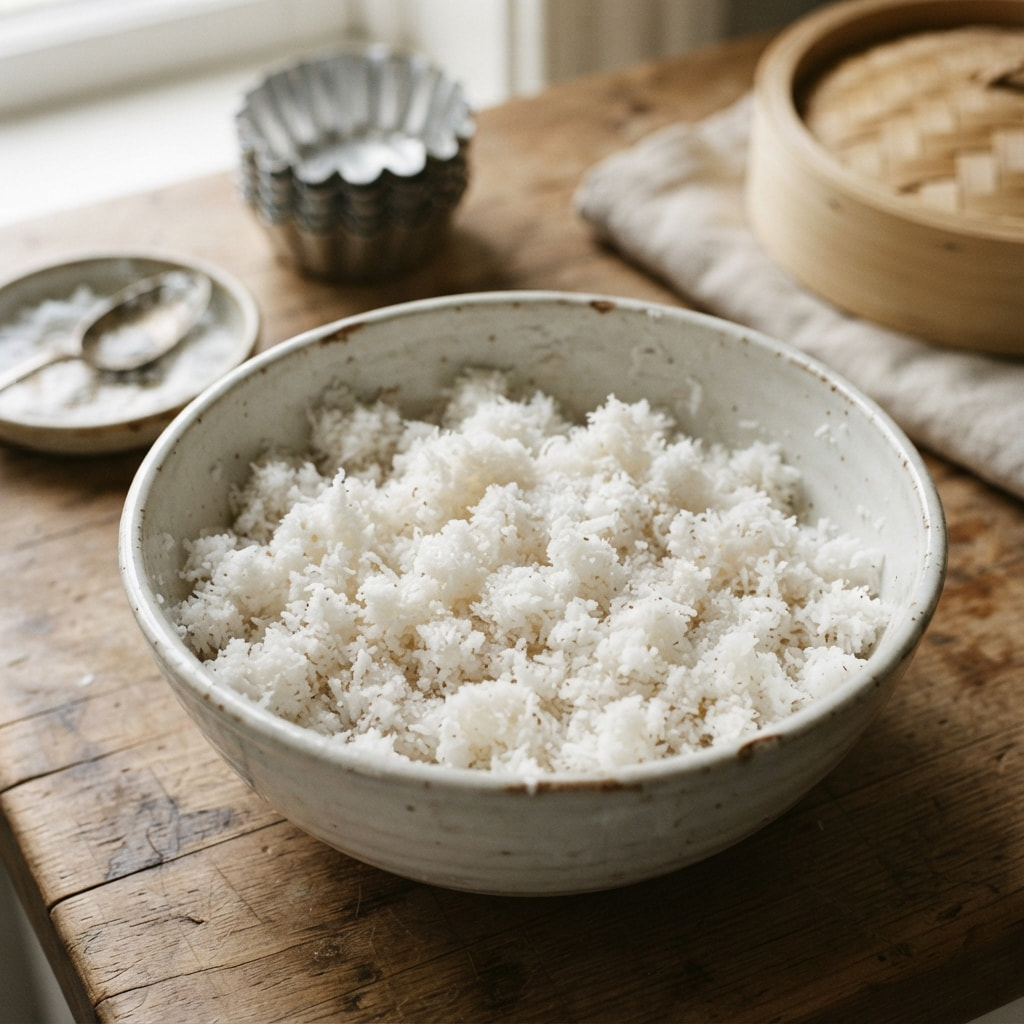
Step 1: Prepare the Coconut Layer
- Mix the grated coconut, salt, and cornstarch until evenly combined.
- Lightly brush the Putu Ayu molds with vegetable oil, then press a small amount of the coconut mixture firmly into the bottom of each mold.
Tips: Don’t leave the coconut too loose. A gentle press helps it form a neat layer after steaming.
Step 2: Make the Pandan Batter
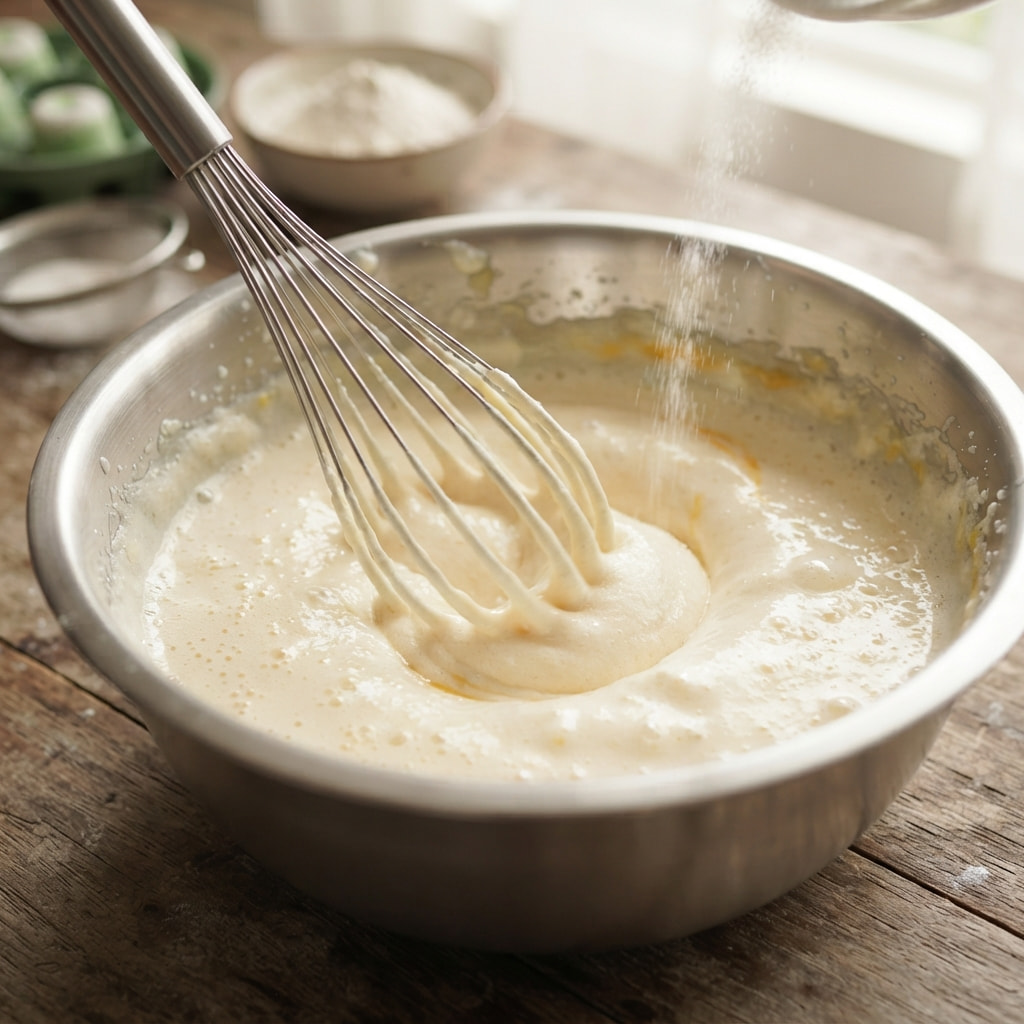
- In a mixing bowl, beat the eggs, sugar, and vanilla extract until pale, thick, and slightly fluffy.
This step is important because the air incorporated into the eggs helps create the light texture Putu Ayu is known for.
Step 3: Add the Dry Ingredients
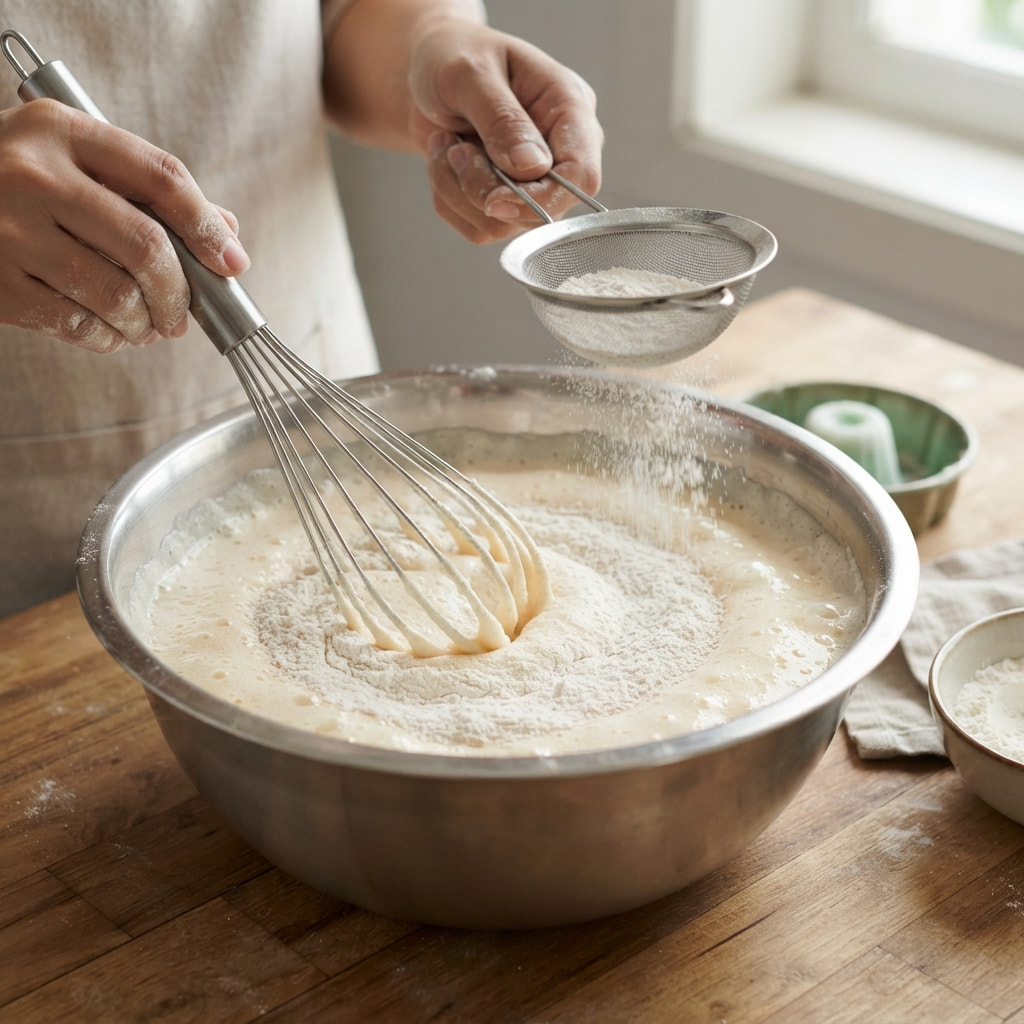
- Sift the flour and baking powder into the egg mixture.
- Fold gently until just combined.
Avoid this; Mixing too aggressively can knock out the air you created in the previous step, so take it slow. The batter should look smooth without being over-mixed.
Step 4: Add Coconut Milk and Pandan
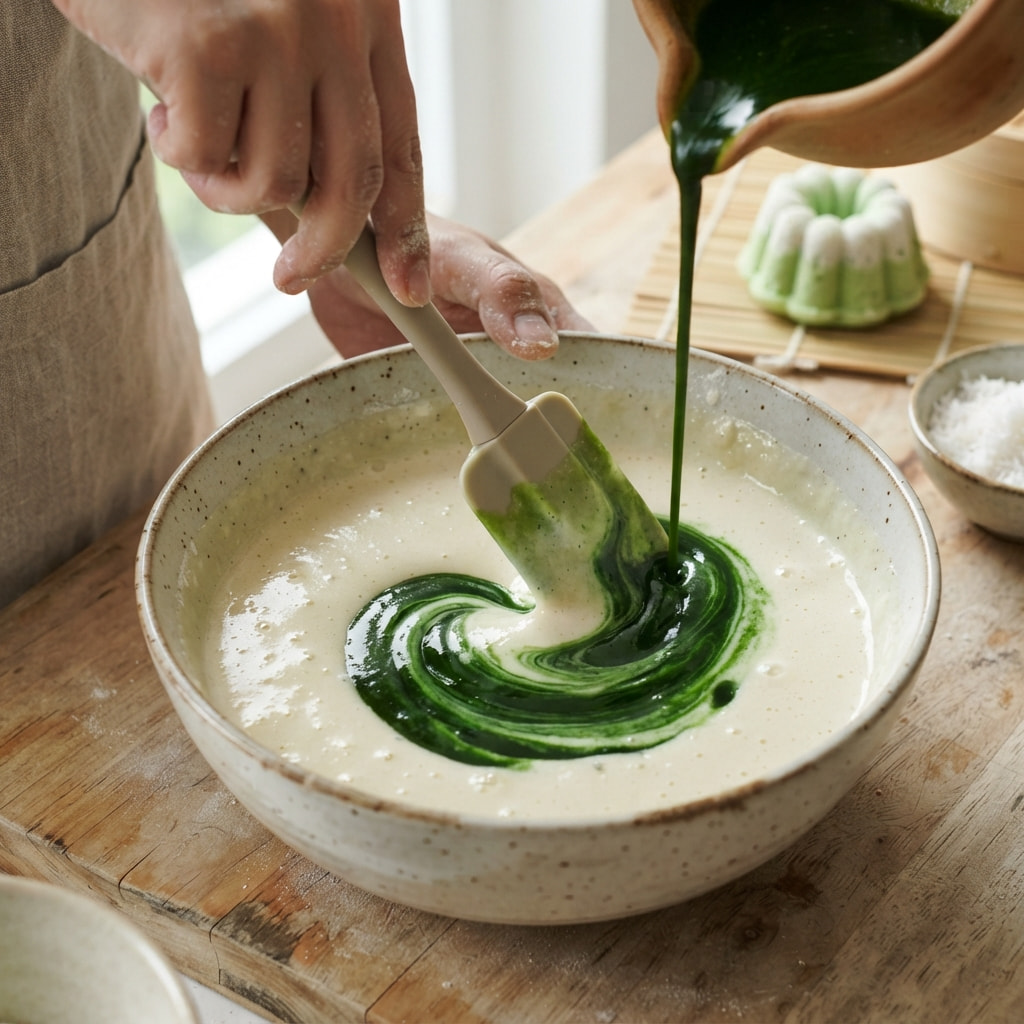
- Mix the coconut milk, pandan juice or pandan extract, and vegetable oil in a small bowl.
- Gradually add the mixture to the batter while folding gently until everything is evenly incorporated.
The batter should have a smooth, pour-able consistency and a fresh pandan aroma.
Step 5: Fill the Molds
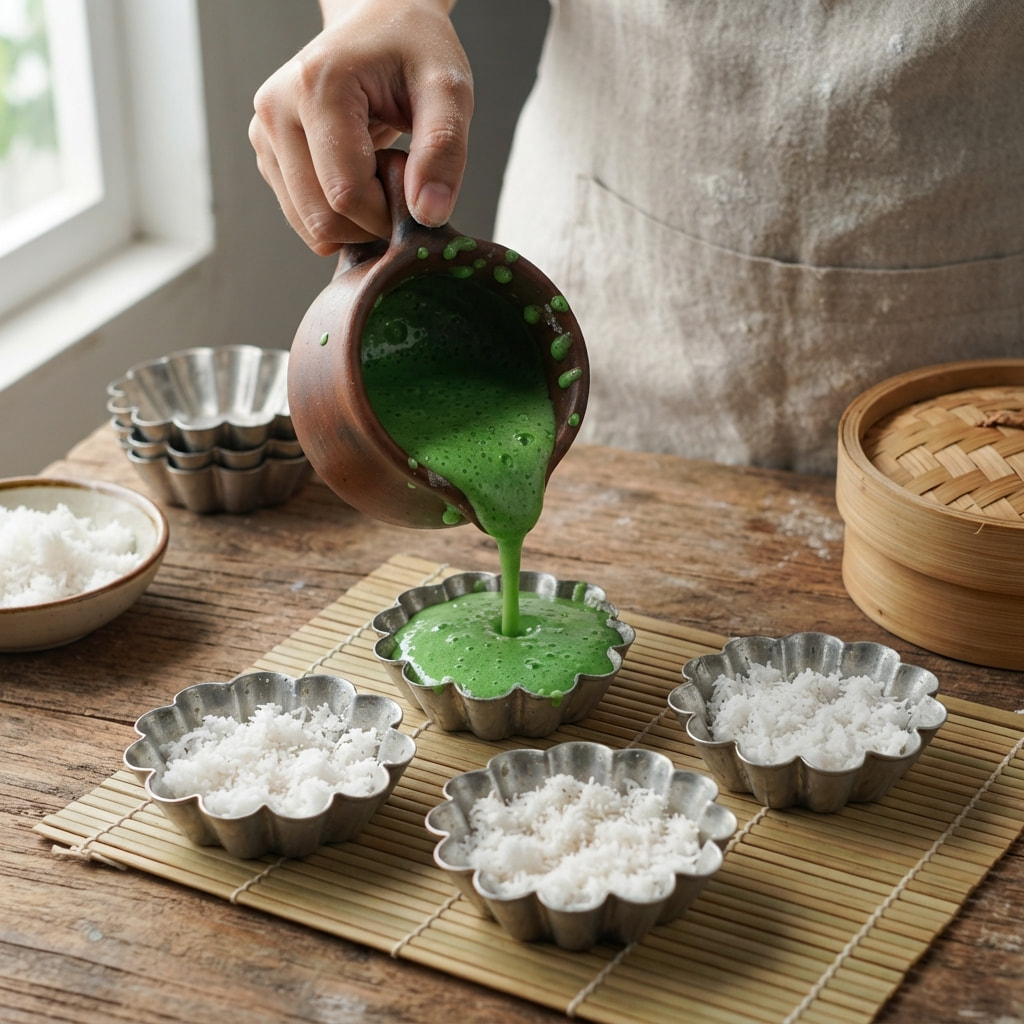
- Pour the pandan batter over the prepared coconut layer.
- Fill each mold to around three-quarters full, leaving enough room for the cake to rise during steaming.
- Tap the molds very gently against the counter once or twice to release large air bubbles.
Step 6: Steam Until Fluffy
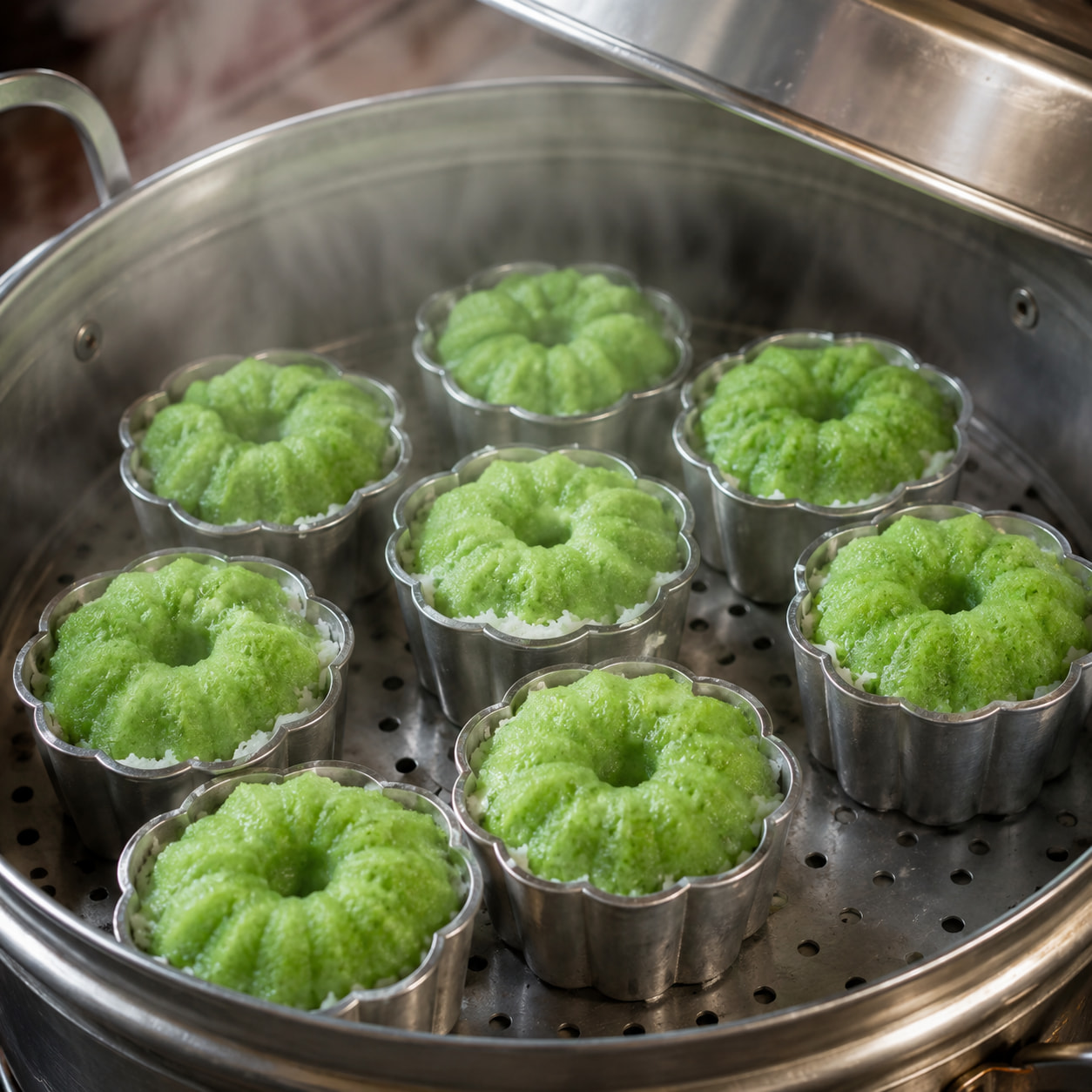
- Bring the water in your steamer to a proper boil before adding the molds.
- Place the molds inside, cover the lid, and steam for about 15–20 minutes, depending on the size of your molds.
- Wrap the steamer lid with a clean kitchen towel if possible. This helps prevent condensation from dripping onto the cakes.
Avoid this: Avoid opening the lid too often because sudden temperature changes can affect the cake’s rise.
Once cooked, remove the molds and allow them to cool for a few minutes before carefully releasing the cakes.
Step 7: Unmold and Serve
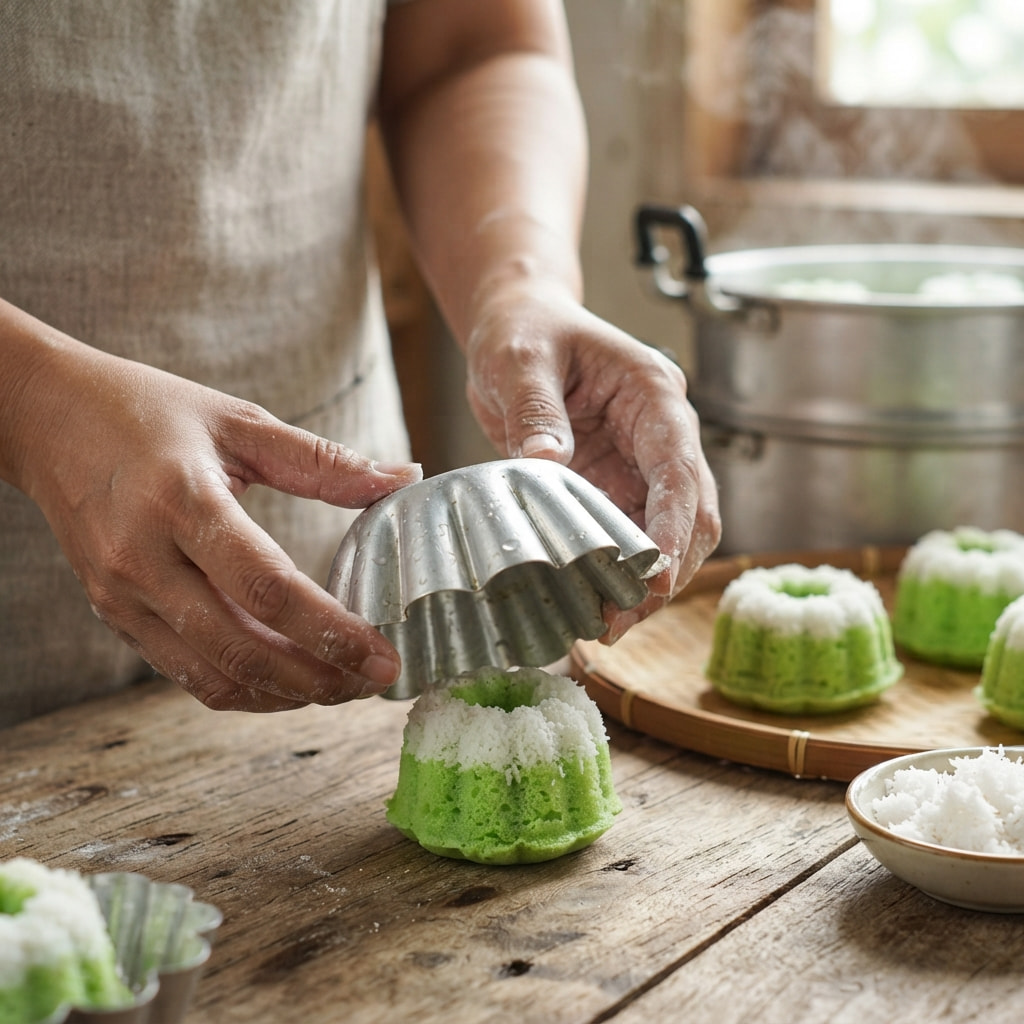
- Once the cakes are slightly cool, gently loosen the edges with your fingers or a small spatula.
- Turn each mold upside down and carefully release the Putu Ayu.
- You should see a beautiful green flower-shaped cake with a neat layer of coconut on top.
- Serve warm or at room temperature.
Pro Tips
- Don’t skip preheating the steamer: The water should already be boiling before the cakes go inside. This creates a stable steaming environment from the beginning.
- Don’t over-mix the batter: Once the flour goes in, fold gently. over-mixing can make the cakes dense instead of fluffy.
- Press the coconut firmly: A loose coconut layer may fall apart when you unmold the cake.
- Don’t overfill the molds: Leave enough space for the batter to rise.
- Keep the steamer lid closed: Every time you open the lid, heat escapes. Your Putu Ayu needs consistent steam to rise properly.
- Use fresh pandan when possible: Fresh pandan gives a more fragrant, natural flavor. However, pandan extract is a perfectly practical option when fresh leaves aren’t available.
Putu Ayu Variations
The traditional pandan version is the classic, but you can have fun with it.
- Chocolate Putu Ayu: Replace part of the flour with cocoa powder for a chocolate version while keeping the coconut topping.
- Cheese Putu Ayu: Add a small amount of grated cheese to the batter for a sweet-and-savory twist.
- Matcha Putu Ayu: For a more globally familiar flavor, replace some pandan flavoring with matcha powder.
- Coconut-Palm Sugar Putu Ayu: Add a little Indonesian palm sugar to the batter for a deeper caramel-like flavor.
Just remember that variations can change the moisture and sweetness of the original recipe, so adjust gradually.
Nutrition Value
The following values are approximate and can vary depending on the ingredients and serving size.
| Nutrient | Approx. per serving |
|---|---|
| Calories | 120–140 kcal |
| Carbohydrates | 18–21 g |
| Protein | 2–3 g |
| Fat | 5–6 g |
| Saturated Fat | 3–4 g |
| Sugar | 8–10 g |
| Fiber | 1–2 g |
| Sodium | 70–100 mg |
Nutrition information is an estimate based on the ingredients used and may vary by brand, portion size, and preparation method.
FAQs
Is Putu Ayu baked or steamed?
Putu Ayu is traditionally steamed, not baked. This is what gives it its soft and moist texture.
Can I make Putu Ayu without pandan?
Yes. Pandan gives Putu Ayu its signature flavor and color, but you can use pandan extract, pandan essence, or another mild flavoring if fresh pandan isn’t available.
Can I use desiccated coconut?
Yes. Unsweetened desiccated coconut can be used when fresh grated coconut is difficult to find. For a softer texture, you can lightly moisten it with a little warm water.
Why did my Putu Ayu turn out dense?
The most common reasons are over-mixing the batter, insufficiently whipped eggs, or steaming at an inconsistent temperature.
Why does my coconut topping fall apart?
The coconut needs to be pressed firmly into the mold. Adding a small amount of cornstarch also helps the coconut layer hold together.
How long does Putu Ayu take to steam?
Most small Putu Ayu cakes take approximately 15–20 minutes to steam.
Common Mistakes
- Using a cold steamer: Always start with properly boiling water.
- over-mixing the batter: Gentle folding is the way to keep the cake light.
- Using too much coconut: A thick coconut layer can make the cake difficult to unmold.
- Opening the steamer repeatedly: Try to keep the lid closed until the cakes are nearly finished.
- Unmolding while extremely hot: Give the cakes a few minutes to settle first.
- Using sweetened coconut: Sweetened coconut can make the final cake overly sweet. Unsweetened coconut is better for the classic flavor.
How to Store
Putu Ayu tastes best fresh, especially on the day it is made.
If you have leftovers, place them in an airtight container and refrigerate for up to 2 days.
Because coconut can spoil relatively quickly, don’t leave the cakes at room temperature for an extended period, especially in a warm kitchen.
To bring back some of the softness, re-steam the cakes briefly before serving.
Avoid microwaving them for too long because the texture can become rubbery.
For longer storage, Putu Ayu can be frozen in an airtight container. Separate individual cakes with parchment paper so they don’t stick together.

Final Thoughts
Putu Ayu is proof that a traditional dessert doesn’t need complicated techniques to make an impression.
It’s soft, fragrant, colorful, and packed with two flavors that are deeply loved across Indonesia: pandan and coconut.
And perhaps that’s why I think Putu Ayu deserves a bigger audience outside Indonesia.
Whenever I eat putu ayu, the combination of its gentle sweetness, slightly savory grated coconut, and fragrant pandan aroma takes me straight back to those childhood trips to the traditional market with my grandmother. I can almost picture the busy stalls, hear the vendors calling out to customers, and remember the excitement of choosing which snacks to bring home. Somehow, one little bite of putu ayu is enough to bring all those memories rushing back.
If you’ve never tried an Indonesian traditional market snack before, start here.
Make a batch, put them on a plate, and see how quickly those little green cakes disappear.
Ready to Try Putu Ayu?
If you make this recipe, I’d love to know how it turned out.
Did you use fresh pandan, pandan extract, or your own twist?
Leave a comment and share your version with someone who loves discovering desserts from around the world.
And if these little Indonesian steamed cakes make it onto your table, share this recipe on Pinterest, Facebook, or with a friend who needs a new snack obsession. 🌿🥥
Asian bread Breakfast cake Cheese Cold Dessert Detox Diet Dinner Drinks Easy food Halal Healthy homemade hot Indonesian Italian Japanese K-Food Low Calory Meal Noodle Omelette Pasta Popular Ramen Simple snacks Soup Street Food Sweet Thai Tiktok viral