If there’s one egg dish that screams comfort food, it’s definitely the Malaysian & Indonesian Telur Dadar. This golden, fluffy omelette is a staple in many Asians homes, often served with hot white rice and spicy sambal. It’s crispy on the edges yet soft and airy inside — the ultimate combo that makes you reach for another bite. Moreover, it’s super easy to make, requiring only a handful of ingredients you probably already have in your kitchen.
This dish perfectly represents the soul of Asian cooking — simple, flavorful, and made with love. Whether you’re a student craving a quick meal or someone exploring Southeast Asian cuisine, this Telur Dadar will bring warmth and nostalgia to your plate.
Whenever I’m confused about what to eat, this recipe is always my go-to because besides being easy to make, the taste always suits my taste.

What is a Malaysian Telur Dadar?
There are some recipes that do not need expensive ingredients or complicated cooking techniques to win people’s hearts. Malaysian Telur Dadar is one of them. This simple egg omelet is a comfort food loved in many homes because it is quick, satisfying, and incredibly flavorful despite using only a few kitchen staples.
Telur Dadar literally means “folded egg” or “omelet” in Malay. Unlike thick Western-style omelets loaded with cheese, this version focuses on soft texture, fragrant aromatics, and balanced seasoning. The eggs are usually mixed with onions, chilies, green onions, and sometimes anchovies or vegetables before being fried until golden on the outside and fluffy inside.
What makes this recipe special is how versatile it is. You can serve it for breakfast with rice, enjoy it as a quick lunch, or pair it with spicy sambal for dinner. In many Southeast Asian homes, this dish is more than just food. It is the kind of recipe people grow up eating during busy mornings, rainy evenings, or lazy weekends.
In my family, my mother usually makes one portion and divides it according to the number of family members. It’s delicious eaten with warm white rice, or sometimes as a side dish with fried rice.
Sometimes the simplest meals create the strongest memories. The smell of eggs frying in a hot pan, mixed with onions and fresh chilies, can instantly make the kitchen feel warm and alive again.
Why You Should Try This Recipe
If you are looking for a recipe that is affordable, beginner-friendly, and full of comforting flavors, this Malaysian Telur Dadar deserves a spot in your kitchen.
Here’s why this recipe is worth trying:
- Uses simple ingredients you probably already have
- Ready in less than 15 minutes
- High in protein and filling
- Perfect for beginner cooks
- Easy to customize with vegetables or meat
- Great for breakfast, lunch, or dinner
- Pairs beautifully with rice and chili sauce
Many people think delicious food requires long preparation, but this recipe proves otherwise. Even with minimal ingredients, the result feels cozy and satisfying, like wrapping yourself in a warm food blanket after a long day.
Why You’ll Love This Recipe
This recipe is the definition of simple comfort food.
The outside becomes lightly crispy while the inside stays soft and fluffy. The onions add sweetness, the chilies give gentle heat, and the eggs tie everything together into a savory bite that tastes homemade in the best possible way.
You will also love how flexible this recipe is. Some days you can keep it traditional and simple. On other days, you can add cheese, vegetables, shredded chicken, or even leftover rice for something more filling.
When I was younger, my mom had a simple habit in the kitchen that I still remember clearly today. She would mix beaten eggs with leftover chili sauce from the night before, then cook everything slowly in a lightly oiled pan with a pinch of salt. The aroma was always rich, savory, and slightly spicy, filling our kitchen and becoming part of our quiet mornings together.
Even now, I still make this recipe the same way, especially on busy mornings. It reminds me of sitting at our family table before starting the day, enjoying a warm homemade meal that felt simple but comforting. Sometimes, the easiest recipes are the ones that stay with us the longest.
For busy people, this recipe feels like a tiny kitchen shortcut. It is fast enough for rushed mornings but comforting enough to feel like a real homemade meal.
Ingredients
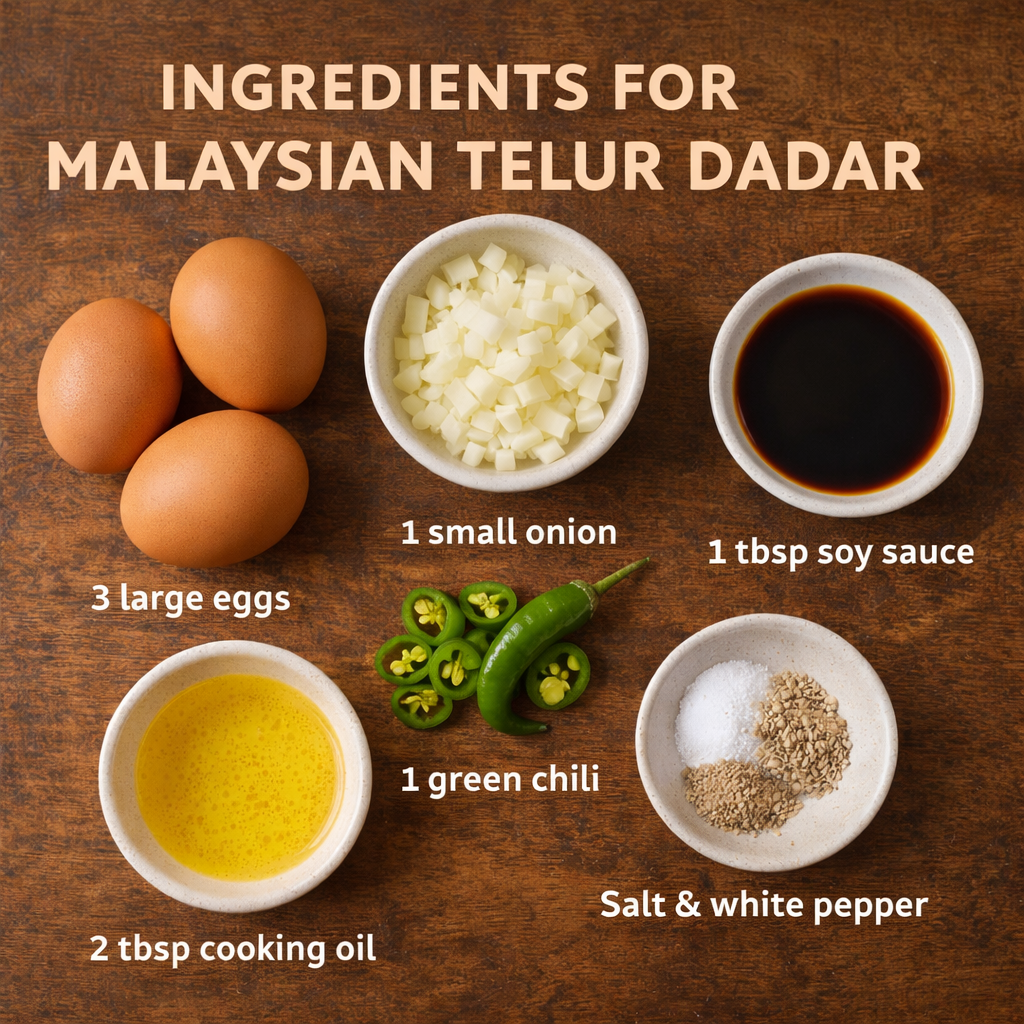
- 3 large eggs
- 1 small onion, finely chopped
- 1 green chili, sliced (optional for spice lovers)
- 1 tbsp soy sauce or fish sauce
- Salt, to taste
- 1/4 tsp white pepper
- 2 tbsp cooking oil
Tools
- Mixing bowl
- Fork or whisk
- Frying pan
- Spatula
How To Make it Step by Step
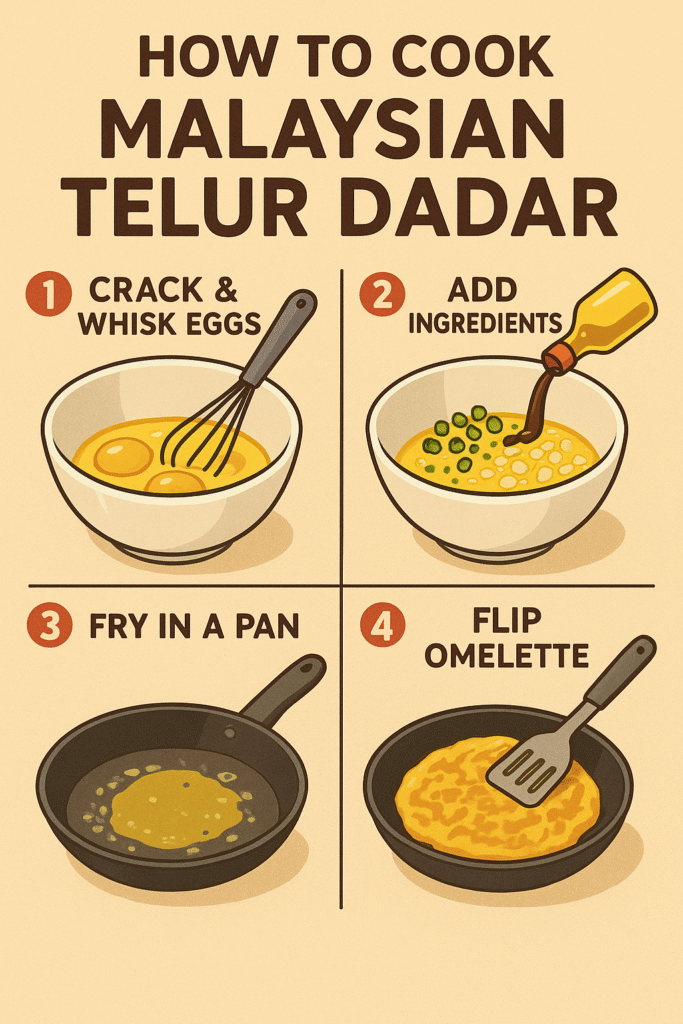
Step 1. Prepare the Egg Mixture
- Crack the eggs into a mixing bowl. Add salt and black pepper, then whisk until slightly frothy.
- Mix in the sliced onions, chilies, and green onions. Stir everything evenly so every bite gets flavor.
- I usually whisk the eggs together with the seasonings first until fully combined. After that, I add the remaining ingredients and continue mixing everything gently until evenly blended. This simple method helps the flavors mix better and gives the telur dadar a softer, more balanced texture when cooked.
Step 2. Heat the Pan
- Place a non-stick frying pan over medium heat. Add cooking oil and allow it to heat properly before pouring in the egg mixture.
- A properly heated pan helps create the beautiful golden edges that make telur dadar so delicious.
Step 3. Cook the Omelet
- Pour the egg mixture into the pan and spread it evenly.
- Cook for 2 to 3 minutes until the bottom becomes golden brown. Carefully flip the omelet using a spatula and cook the other side until fully set.
- Do not rush this step. Gentle heat keeps the eggs soft and fluffy instead of dry.
Step 4.Serve and Enjoy
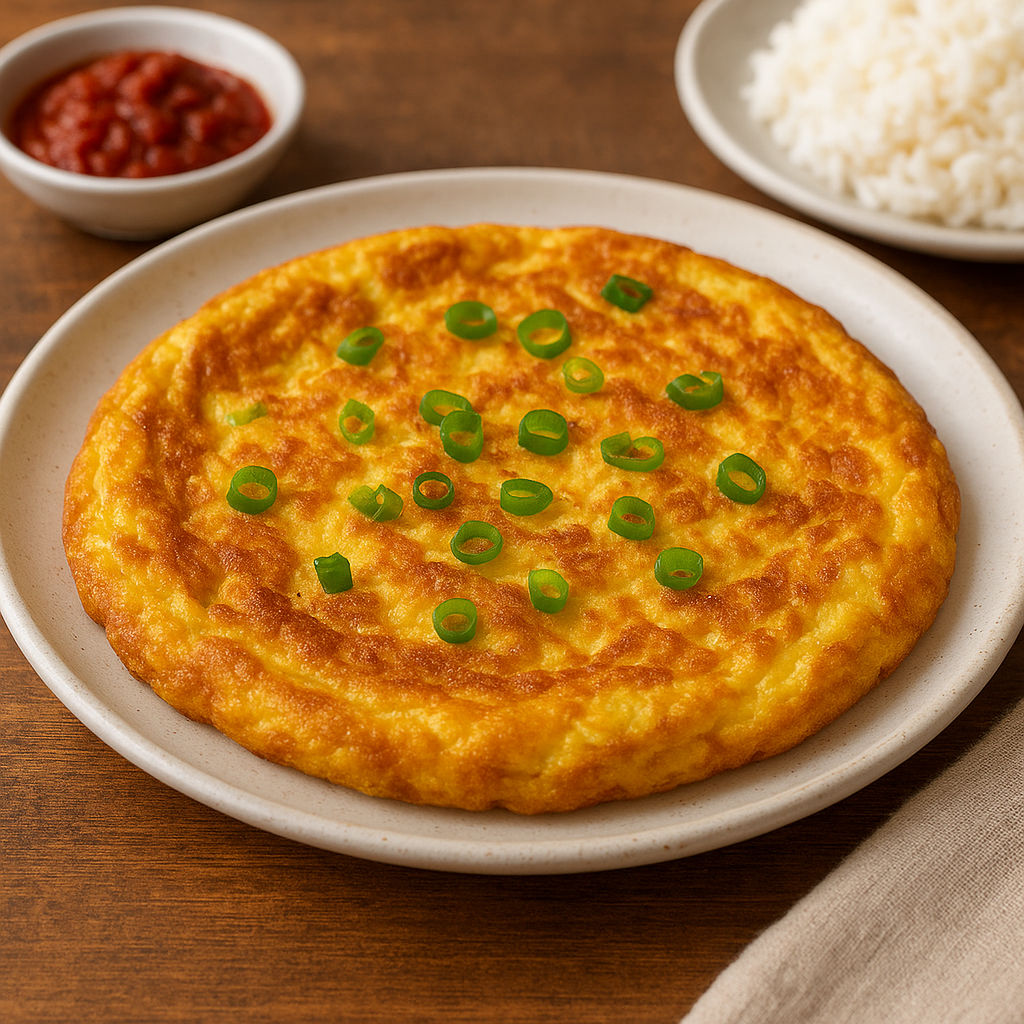
- Transfer the telur dadar onto a plate and serve immediately while warm.
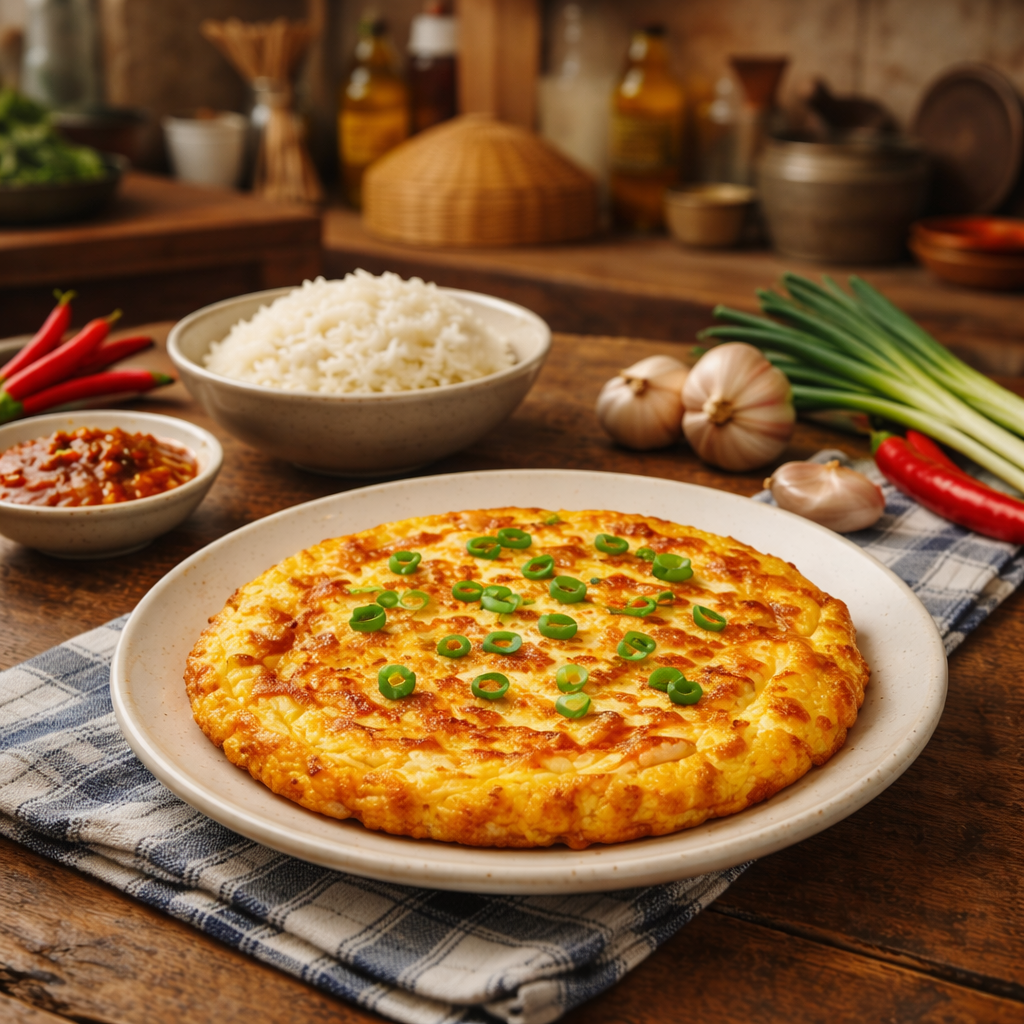
- This omelet tastes amazing with steamed rice, sambal, soy sauce, or even ketchup.
- Some people enjoy it as a quick snack, while others pair it with a full meal. Either way, it disappears quickly from the table.
If you like egg dishes, you can try<New Egg Soup Recipe: Easy, Healthy & Nutritious Comfort Food for Busy Days>, you can try
Pro Tips
- Use fresh eggs for the fluffiest texture
- Cook on medium heat to avoid burning
- Whisk the eggs well to add more air
- Thinly slice the onions so they cook evenly
- Do not overcrowd the pan
- Add a little water or milk for extra softness
My personal tip is to beat the eggs first until the yolks and whites are fully combined. While whisking, I add the ground spices so the flavors blend evenly into the eggs. After that, I mix in the remaining ingredients and continue beating gently until everything is well combined. This simple method helps create a smoother texture and ensures every bite of the telur dadar is flavorful and evenly seasoned.
One tiny trick many home cooks use is letting the eggs rest for one minute after whisking. It creates a smoother texture once cooked.
Variations
- Crispy Edge Version : Use slightly more oil and cook longer for crispy golden edges.
- Spicy Telur Dadar : Add extra chili slices or chili flakes for more heat.
- Cheese Omelet Version : Sprinkle shredded cheese inside before folding.
- Vegetable Telur Dadar : Add grated carrots, cabbage, or spinach for extra nutrition.
- Seafood Style : Mix in small shrimp or anchovies for a richer umami flavor.
Best Side Dishes for Telur Dadar
This recipe becomes even better when paired with simple side dishes.
Popular combinations include:
- Steamed white rice
- Sambal chili sauce
- Fried rice
- Fresh cucumber slices
- Soy sauce with chilies
- Warm soup
In many homes, telur dadar becomes the “emergency hero meal” when there is little time but everyone is hungry.
Nutrition Value
Telur Dadar may look simple, but it’s packed with nutrients!
- Calories: ~180 kcal per serving
- Protein: 10g
- Fat: 12g
- Carbohydrates: 2g
- Cholesterol: 210mg
- Vitamin A & D: Moderate levels
This dish provides an excellent source of protein and healthy fats, making it a balanced option for breakfast, lunch, or dinner.
Still hungry for more? Check out these must-try recipes and keep the culinary adventure going.<Easy Budget Stir Fry Eggs That Taste Better Than Takeout>, you will love it
FAQs
Can I make telur dadar without onions?
Yes. You can skip onions or replace them with green onions or shallots.
Is this recipe spicy?
Not necessarily. You can adjust the chili amount based on your preference.
Can I store leftovers?
Yes. Store leftovers in an airtight container inside the refrigerator for up to 2 days.
Can beginners make this recipe?
Absolutely. This recipe is very beginner-friendly and requires minimal cooking skills.
What oil is best for frying?
Neutral oils like vegetable oil or canola oil work best.
Common Mistakes When Making Malaysian Telur Dadar
- Not whisking the eggs enough
If the eggs aren’t whisked until slightly frothy, the omelette will turn flat and dense. Air is the secret sauce for that fluffy texture. - Pan not hot enough
Pouring the eggs into a lukewarm pan is a crime to crispiness. The oil needs to be hot so the edges set fast and turn golden. - Using too little oil
Telur Dadar isn’t a low-oil dish. Skimping on oil means no crispy edges and zero drama on texture. - Overloading with ingredients
Too many onions or chilies can make the omelette watery. Keep it balanced so the eggs stay in control. - Flipping too early
If you rush the flip, the omelette can break. Let the bottom fully set before committing. - Cooking on high heat nonstop
High heat at the start is good, but blasting it the whole time can burn the outside while the inside stays raw.
How to Store
Usually, my family will finish the Telur Dadar in one meal, because this recipe is very easy to make, and all the ingredients are easy to get, and also if eaten warm it tastes better, so it’s better not to have any leftovers, but if you still want to save it, then you can try the following tips.
- Let it cool first
Never store Telur Dadar while it’s hot. Trapped steam = soggy texture and faster spoilage. Give it 20–30 minutes to cool naturally. - Use an airtight container
Place the omelette in a clean, airtight container or wrap it tightly with food wrap. This keeps it from absorbing fridge smells. - Refrigerator storage
Store in the fridge for up to 2 days. After that, the texture and flavor start to fall off. - Freezer option (not ideal, but possible)
You can freeze it for up to 1 month, but expect a softer texture after reheating. Wrap tightly with plastic wrap, then foil. - Reheating the right way
Reheat in a pan over low heat to bring back crisp edges. Microwave works in emergencies, but it’ll lose that signature crunch.
Final Thoughts
Malaysian Telur Dadar proves that comfort food does not need to be complicated. With only a few ingredients and a simple cooking process, you can create something warm, satisfying, and deeply comforting.
This recipe is perfect for beginners, busy workers, students, or anyone craving a quick homemade meal without stress.
Sometimes the best dishes are not the most luxurious ones. They are the recipes that quietly stay with us for years, waiting in the kitchen whenever we need something simple and comforting.
For me, this is one of the easiest and quickest recipes to prepare in the morning. It tastes delicious served with warm rice or even alongside fried rice for a more filling meal. One thing I love most about this recipe is how flexible it is. You can add different kinds of fillings, from proteins like chicken and shrimp to simple vegetables you already have in the kitchen. Almost everything works well with this telur dadar recipe as long as the ingredients stay balanced and not overly crowded.
I also love how this simple dish can bring people together around the table. Whether you cook it for your family or prepare it just for yourself before starting the day, it carries a comforting warmth that reminds you of home and quiet mornings shared with loved ones.

Did you try this Malaysian Telur Dadar recipe?
Share your favorite version in the comments. Do you like it classic, spicy, cheesy, or extra crispy?
If you enjoyed this recipe, send it to your friends or family so they can try this simple Malaysian comfort food too. Your kitchen might just smell amazing tonight.
Don’t stop here. Browse our related recipes and turn your kitchen into a place full of delicious surprises. <5 Easy Breakfast Recipes to Start Your Day Right>, I guarantee it
Asian bread Breakfast cake Cheese Cold Dessert Detox Diet Dinner Drinks Easy food Halal Healthy homemade hot Indonesian Italian Japanese K-Food Low Calory Meal Noodle Omelette Pasta Popular Ramen Simple snacks Soup Street Food Sweet Thai Tiktok viral