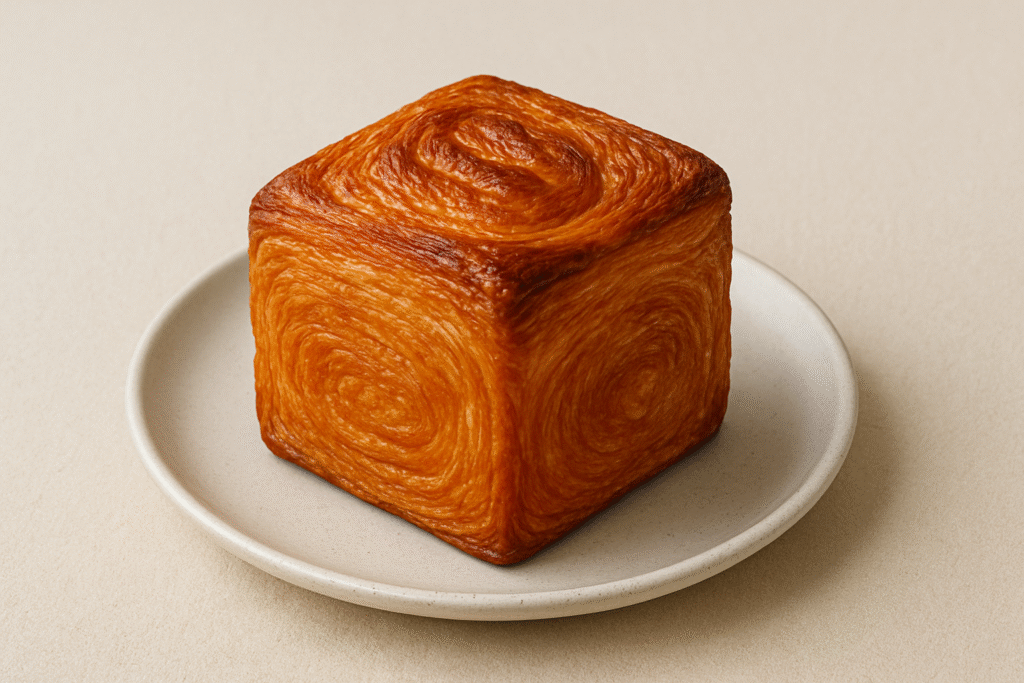
If you’ve been scrolling through TikTok or Instagram lately, like me (LOL) you’ve definitely seen the Croissant Cube — that perfectly golden, cube-shaped pastry that looks like it belongs in a museum. Originating from Paris, this viral treat has taken the world by storm, and people are literally lining up for hours just to get a bite.
In my case, I hate waiting in line or going out, preferring to stay home and experiment to my heart’s content (e.g. adding ketchup….. I’m kidding). Of course, you can also adjust the flavors; I usually add a lot of butter because savory flavors are my favorite.
But what makes this pastry so special? And why is everyone obsessed with it? Let’s dive into the buttery world of the Croissant Cube that’s redefining breakfast goals for Gen Z foodies everywhere. here
Imagine the flaky, buttery layers of a classic French croissant — now compressed into a neat little cube that’s almost too cute to eat. The Croissant Cube is basically the next-gen croissant: crispy outside, soft and airy inside, with fillings that range from vanilla cream to pistachio, chocolate, or even matcha.
It’s not just a pastry; it’s an aesthetic moment. One bite and you get that ASMR-worthy crunch followed by the melt-in-your-mouth texture that screams Parisian perfection.

What is Croissant Cube?
The Croissant Cube is the modern Paris pastry that completely took over TikTok, Instagram, and bakery counters around the world. Instead of the classic crescent shape, this croissant is baked inside a square mold, creating a perfectly geometric cube with hundreds of flaky buttery layers inside.
At first glance, it almost looks too beautiful to eat. But the real magic happens after the first bite. The outside is deeply golden and crispy, while the inside stays soft, airy, and filled with delicate layers that melt in your mouth.
What makes this pastry even more addictive is the filling. Some bakeries use pistachio cream, chocolate ganache, vanilla custard, or even matcha cream. Once you cut it open, the filling slowly flows out like a luxury dessert commercial on your phone screen.
The first time I saw a Croissant Cube on social media, I honestly thought it looked impossible to make at home. It looked like something only professional Paris pastry chefs could create after years of training. But after trying it myself, I realized the process is actually very enjoyable, especially if you love baking projects that feel special and rewarding.
Why You should try Croissant Cube?
There is something incredibly satisfying about pulling a homemade Croissant Cube out of the oven. The buttery aroma fills the kitchen, the crispy layers start crackling as they cool, and suddenly your home feels like a tiny Paris bakery.
This recipe is perfect if you:
- Love trying viral food trends
- Want a bakery-style dessert at home
- Enjoy flaky buttery pastries
- Want an impressive recipe for guests or family
- Love aesthetic desserts for social media photos
Unlike many complicated pastry recipes online, this version is simplified for beginners while still giving you that iconic flaky texture.
The first time I tried making this Croissant Cube recipe, I was honestly a little doubtful because I rarely eat French pastries, so I wasn’t very familiar with the texture or the process. But with the help and encouragement of my friend, we finally decided to try making it together.
Even though our first attempt wasn’t perfectly shaped like the ones from Paris bakeries, the result still surprised us. The outside turned beautifully crispy and flaky, while the inside stayed soft and airy. My favorite part was definitely the filling, because I could adjust the sweetness exactly to my taste, which made the pastry feel even more special and homemade.
Why You’ll Love This Recipe?
- Crispy outside and soft inside
- Beginner-friendly compared to traditional croissants
- Customizable fillings
- Perfect for brunch, dessert, or coffee time
- Looks expensive but can be made at home
- Great for content creation and food photography
- The buttery layers taste incredible fresh from the oven
One of my favorite things about this recipe is the sound. Yes, the sound. The moment you cut into the pastry, you hear that delicate crunchy crackle from the flaky layers. It feels oddly satisfying, like edible ASMR.

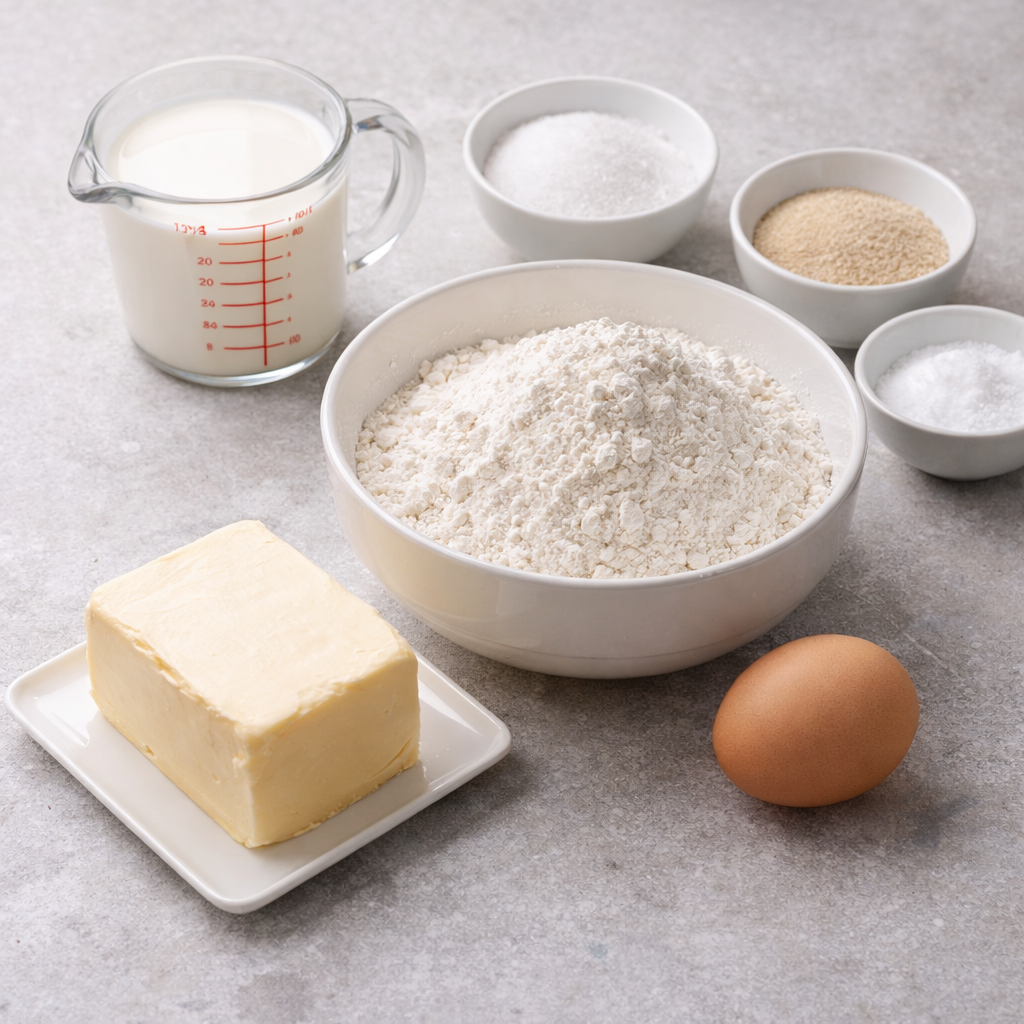
Ingredients You’ll Need
- 250g all-purpose flour
- 30g sugar
- 1 tsp salt
- 10g instant yeast
- 125ml cold milk
- 25g butter (for the dough)
- For the Layers:
- 125g unsalted butter (cold, for laminating)
- Optional Fillings:
- Pastry cream, chocolate ganache, pistachio paste, or fruit jam
Tools
- Rolling pin
- Pastry brush
- Square or cube baking molds
- Oven (preheated to 190°C / 375°F)
How to Make it Step by Step
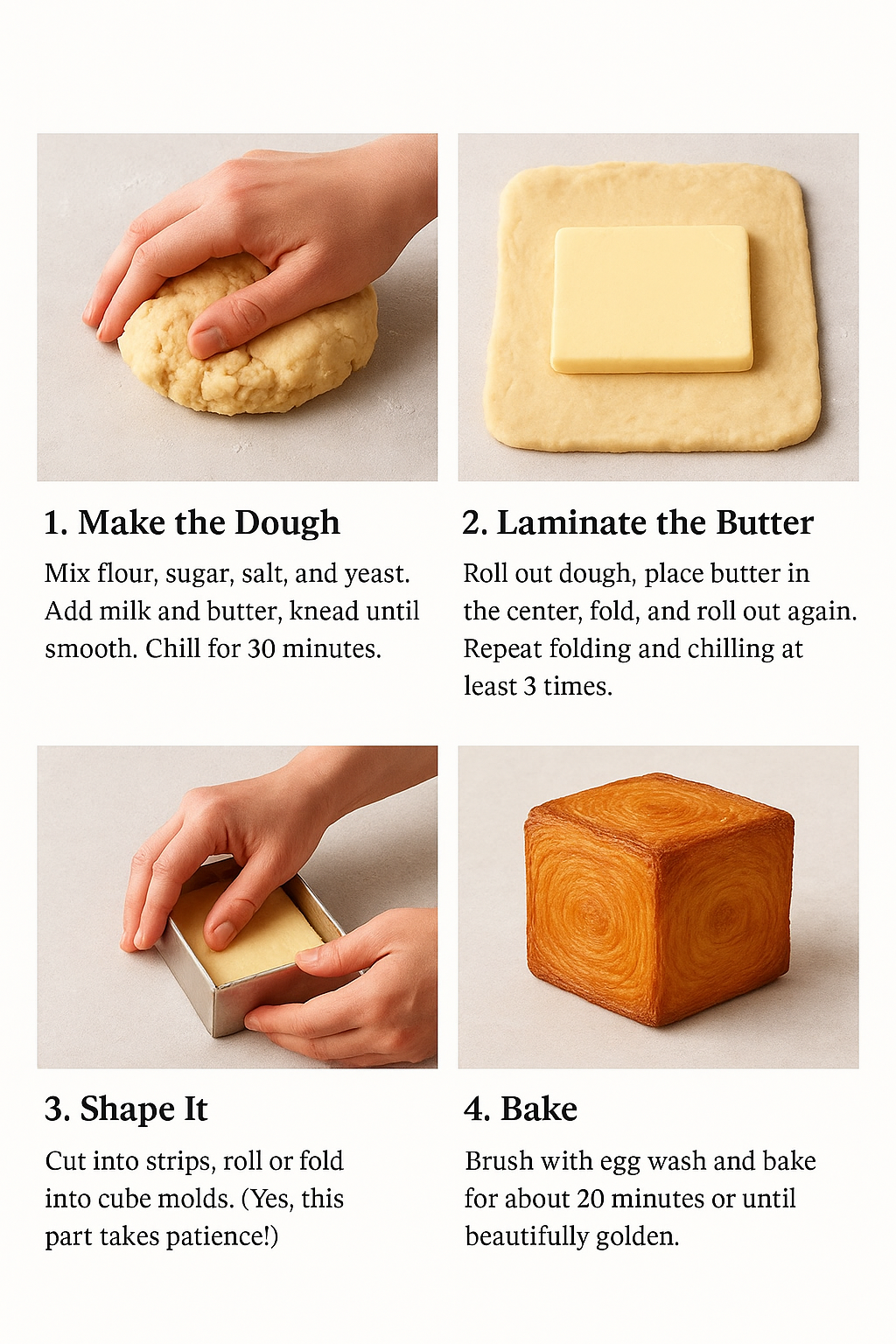
Step 1: Prepare the Dough
- In a large bowl, mix flour, sugar, salt, and instant yeast. Slowly pour in cold milk and add the butter.
- Knead until the dough becomes smooth and elastic. This usually takes about 8 to 10 minutes.
- Cover the dough and chill it in the refrigerator for 30 minutes.
Beginner Tip
Cold dough is extremely important because it keeps the butter from melting too early during laminating.
Step 2: Prepare the Butter Layer
- Place the cold butter between two sheets of parchment paper. Use a rolling pin to flatten it into a thin square.
- Try to keep the thickness even so the layers bake evenly later.
Step 3: Laminate the Dough
- Roll out the chilled dough into a rectangle. Place the butter sheet in the center and fold the dough over it.
- Roll it out gently, then fold it again like a letter.
- Repeat this process 3 times, chilling the dough between folds.
- This is the secret behind those beautiful flaky layers.
“At this stage, my kitchen started smelling like butter already, and honestly, I got excited even before baking them.”
Step 4: Shape the Cube
- Roll the dough into a long rectangle and cut it into strips or squares.
- Carefully place the dough inside cube molds or square baking molds.
- Do not overfill the molds because the dough will rise significantly.
Step 5: Proof the Dough
- Let the dough rise until puffy and soft. This usually takes about 1 to 2 hours depending on room temperature.
- The dough should look airy before baking.
Step 6: Bake Until Golden
- Brush the top with egg wash and bake at 190°C (375°F) for about 20 minutes.
- The Croissant Cubes should become deeply golden with crispy flaky edges.
- Your kitchen will smell absolutely incredible at this point.
Step 7: Fill and Serve
- Once cooled slightly, pipe your favorite filling into the center.
- Chocolate and pistachio are the most popular choices because they pair perfectly with buttery pastry.
- Serve warm for the best texture.
Pro Tips
- Always use cold butter
- Chill the dough between folds
- Avoid over-kneading
- Use good-quality butter for better flavor
- Bake until deeply golden for maximum crispiness
- Let the pastry cool slightly before filling
One small trick I learned is placing the dough back into the fridge whenever it feels too soft. This keeps the layers clean and flaky.
Variations
- Chocolate Croissant Cube: Fill with chocolate ganache or Nutella.
- Pistachio Croissant Cube: Use pistachio cream and crushed pistachios.
- Matcha Version: Add matcha pastry cream for a modern Japanese-inspired flavor.
- Savory Version: Use cheese, smoked salmon, or truffle cream for a brunch-style pastry.
Why This Pastry Became Viral
The Croissant Cube became popular because it combines three things people love:
- Beautiful presentation
- Satisfying crunchy texture
- Social media appeal
Food creators on TikTok and Instagram helped turn this pastry into an international trend.
Its perfect cube shape immediately catches attention, especially when people cut it open and reveal the creamy filling inside.
Nutrition Value
| Nutrition | Amount Per Serving |
|---|---|
| Calories | 320-420 kcal |
| Carbohydrates | 35g |
| Protein | 6g |
| Fat | 20g |
| Saturated Fat | 12g |
| Sugar | 8g |
| Sodium | 210mg |
FAQs
Can beginners make Croissant Cubes?
Yes. The process takes time, but the steps are simple if you follow them carefully.
Do I need special cube molds?
Square baking molds work well if you do not have official cube molds.
Can I freeze the dough?
Yes. Freeze after shaping and proof before baking later.
Why are my layers not flaky?
Usually because the butter became too warm during laminating.
Which filling tastes best?
Chocolate and pistachio are the most popular choices worldwide.
Common Mistakes When Making Croissant Cube
- Butter Melting Into the Dough
If the butter gets too warm, it blends into the dough instead of creating layers. Therefore, always chill between folds to keep that iconic flaky structure. - Skipping Rest Time
Rushing the process may seem tempting, but it leads to dense pastries. Because gluten needs time to relax, resting the dough is non-negotiable. - Uneven Rolling
Rolling the dough too thin on one side causes uneven baking. As a result, some layers may burn while others stay pale. - Overproofing the Dough
Letting the dough rise too long can collapse the layers. Instead, proof just until the cubes look puffy and airy. - Baking at the Wrong Temperature
An oven that is too hot burns the outside before the inside cooks. Conversely, an oven that is too cool results in greasy croissant cubes. - Using Low-Quality Butter
Since butter is the star ingredient, low-quality butter means flat flavor. Choose high-fat European-style butter for best results. - Not Using a Mold Properly
Without firm support, the cube shape can spread. So, always secure the dough inside a sturdy square mold before baking.

How to Store
Store Croissant Cubes at room temperature in an airtight container for up to 2 days. For longer storage, freeze them for up to one month and reheat in the oven to restore crispness.
However, I suggest you enjoy it while it’s warm, accompanied by a cup of cappuccino, let it cool down and then reheat it, of course the experience will be different.
Final Thoughts
The Croissant Cube is one of those recipes that feels luxurious but surprisingly achievable at home. Yes, it takes patience, but the result feels incredibly rewarding once you see those flaky golden layers come out of the oven.
On a cool morning, when my body is still slowly waking up, a cup of warm coffee paired with a crispy and buttery Croissant Cube feels like the perfect way to start the day. The crunchy layers on the outside and the soft filling inside can instantly make the morning feel more comforting and enjoyable.
In the afternoon, this pastry is also perfect to enjoy while relaxing and chatting with friends. And at night, after a long day, sitting in front of the TV with a sweet and flaky Croissant Cube somehow makes the evening feel calmer and more complete.
What I love most about this recipe is not only the taste, but also the experience of sharing it. You can upload your homemade Croissant Cube creations on social media, see people reacting to the beautiful flaky layers and creamy filling, and maybe even inspire others to try this viral pastry trend themselves. It feels fun knowing that something you baked in your own kitchen can look just as exciting as the pastries trending online. ✨
Sometimes the best recipes are not just about taste. They are about the experience, the smell of butter in the kitchen, the excitement while waiting for the pastry to bake, and the happiness of sharing something beautiful with people you love.
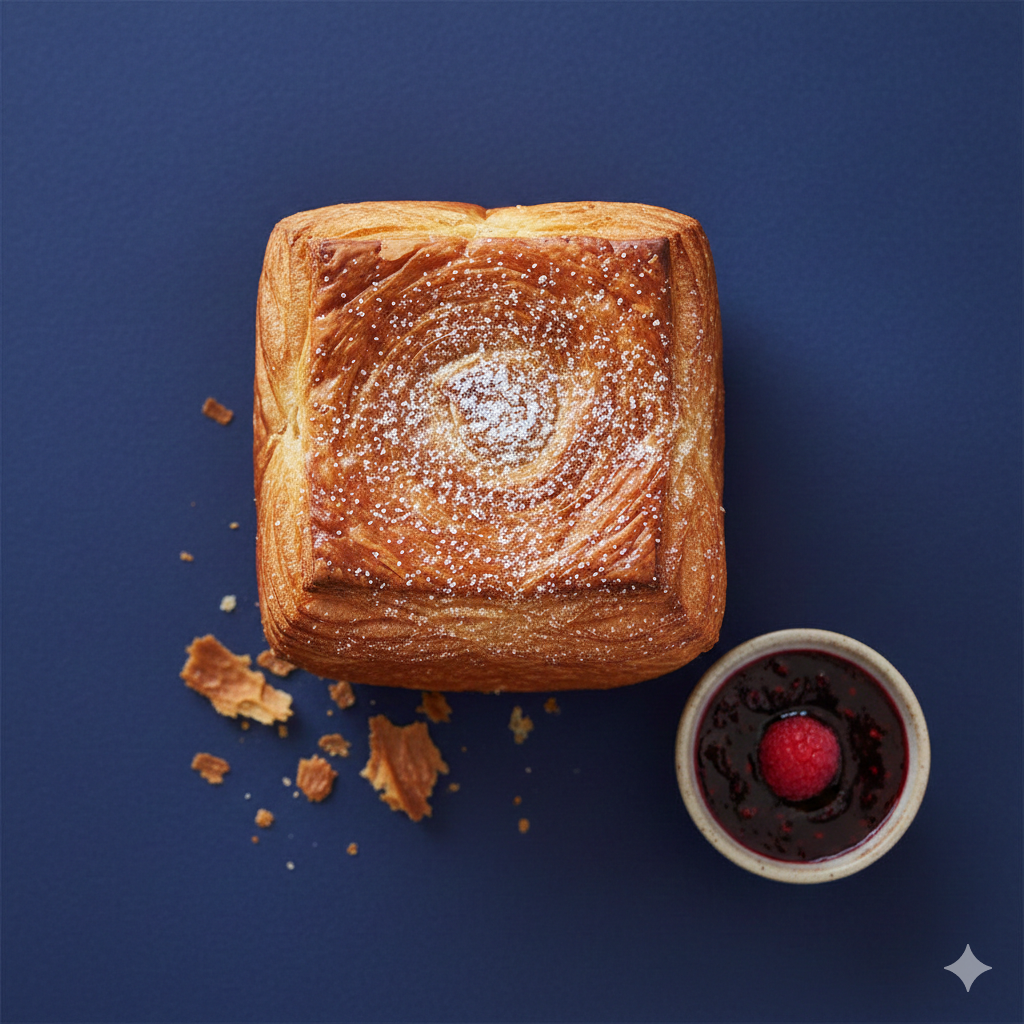
Have you tried making this viral Croissant Cube at home yet?
Share your favorite filling combination in the comments, and don’t forget to send this recipe to your fellow pastry lovers or baking friends. Your next homemade Paris-style bakery moment might start right in your own kitchen.