The first time I saw a bowl of Es Doger, I honestly couldn’t figure out what I was looking at.
There was pink shaved ice, creamy coconut milk, bright green avocado, chewy jelly, sweet fermented cassava, and pieces of jackfruit all living together in one bowl. It looked almost too colorful to make sense. But after the very first spoonful, everything suddenly clicked.
It wasn’t just another iced dessert.
It was creamy, fruity, refreshing, and surprisingly balanced. Every bite tasted slightly different, making you want just one more spoonful until the bowl was completely empty.
That experience made me realize something.
Some desserts aren’t famous because they’re complicated. They’re unforgettable because they know how to surprise you.
Indonesia has countless traditional sweets that deserve global attention, and Es Doger is definitely one of them. While desserts like bingsu, halo-halo, or kakigori have become internationally recognized, Es Doger quietly offers its own tropical personality with rich coconut milk, fresh fruits, and colorful toppings that instantly brighten any hot day.
For me, the best time to enjoy es doger is on a hot day. Whenever the weather is warm and I’ve been out in the sun, it’s one of the first desserts that comes to mind. There’s something incredibly satisfying about that first spoonful of creamy coconut milk, sweet toppings, and crushed ice after a long, humid afternoon. It instantly cools me down and makes the day feel a little more refreshing. That’s probably why es doger has become one of my favorite Indonesian desserts whenever summer rolls around.
Whether you’ve never heard of Es Doger before or you’re looking for an easy homemade version, this recipe will help you recreate one of Indonesia’s most refreshing street desserts using simple ingredients that are surprisingly easy to find almost anywhere in the world.
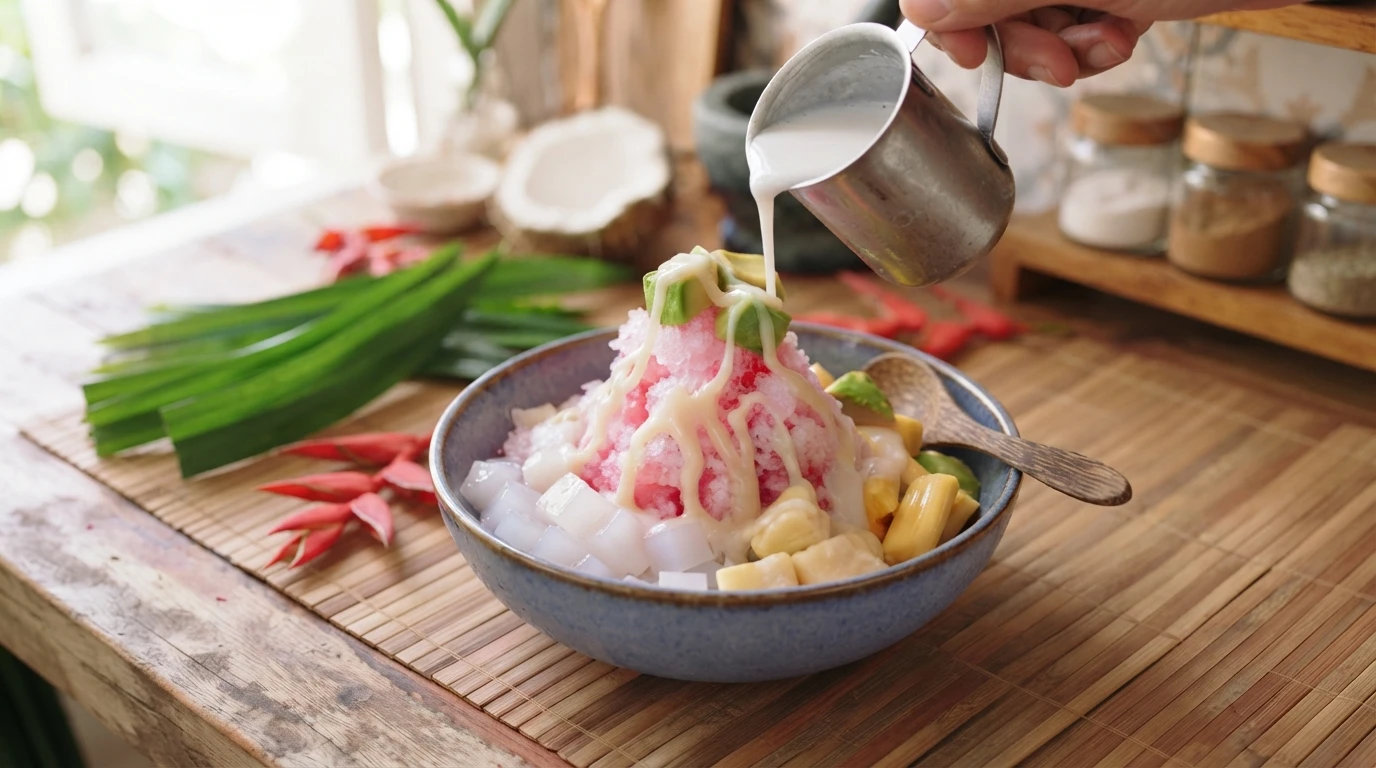
What is Es Doger?
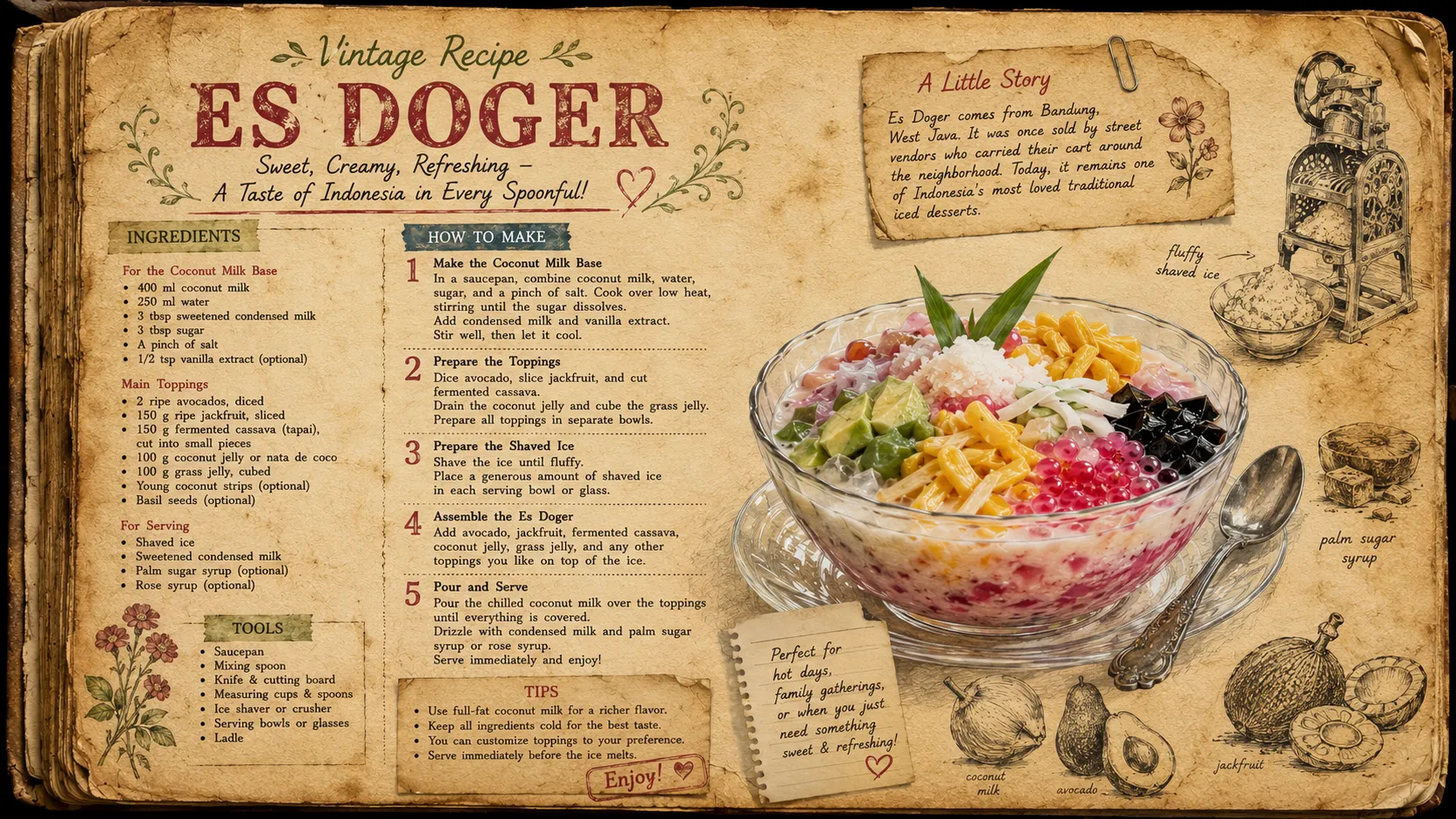
Es Doger is a traditional Indonesian iced dessert made with sweet coconut milk, shaved ice, avocado, jackfruit, fermented cassava (tapai), colorful jelly, and various sweet toppings.
Unlike many shaved ice desserts that rely mostly on flavored syrups, Es Doger stands out because its creamy coconut milk becomes the heart of the dish. The coconut milk isn’t just poured on top. It’s lightly sweetened and often combined with condensed milk, creating a rich base that perfectly complements the fresh fruits and chewy toppings.
The dessert originated in West Java, especially around Bandung, before becoming popular throughout Indonesia. Today, you’ll find Es Doger sold by street vendors, traditional markets, food courts, and local dessert shops, especially during the hot summer season.
The name “Doger” is believed to come from the traditional vendors who carried their dessert carts while calling out to attract customers. Over time, the dessert itself became known simply as Es Doger.
One of the reasons this dessert continues to be loved across generations is its flexibility. Every vendor adds their own unique twist. Some include bread cubes, sticky rice, basil seeds, grass jelly, coconut meat, or even colorful tapioca pearls. There is no single “correct” version, making Es Doger one of Indonesia’s most creative traditional desserts.
Today, people around the world are beginning to appreciate tropical desserts that combine fresh fruit with creamy flavors, making Es Doger a perfect introduction to Indonesian cuisine for anyone looking to try something new.
Why You Should Try Es Doger
If you’re searching for a dessert that’s different from ordinary ice cream or shaved ice, Es Doger deserves a place on your list.
Here are a few reasons why this colorful Indonesian dessert is worth making.
- It offers incredible texture in every spoonful: Creamy coconut milk, crunchy shaved ice, buttery avocado, chewy jelly, soft fermented cassava, juicy jackfruit, and silky condensed milk all come together in one refreshing dessert.
- It’s naturally tropical: Many ingredients come straight from Southeast Asia’s tropical abundance, creating flavors that feel light, fresh, and naturally sweet.
- It’s beginner-friendly: There’s no baking, complicated cooking techniques, or expensive equipment required. Most of the work simply involves preparing ingredients and assembling everything into a beautiful bowl.
- It’s highly customizable:
- Don’t like avocado? Leave it out.
- Can’t find fermented cassava? Use young coconut or nata de coco instead.
- Want extra sweetness? Add palm sugar syrup.
- Es Doger is one of those recipes that welcomes creativity.
- It’s perfect for hot weather: Whether it’s summer, a backyard party, Ramadan, or simply a warm afternoon, this dessert instantly cools you down while satisfying your sweet cravings.
- It’s a fun way to explore Indonesian food culture: Many people know Indonesia for nasi goreng or satay, but traditional desserts are just as exciting. Making Es Doger at home lets you experience another side of Indonesian culinary heritage.
Why You’ll Love This Es Doger Recipe
There are plenty of Es Doger recipes available online, but this version focuses on making the dessert approachable for anyone, no matter where they live.
Here’s why you’ll love it.
- Easy ingredients that can be substituted if certain tropical fruits aren’t available.
- No advanced cooking skills required.
- Ready in about 20 minutes, making it perfect for busy days.
- Naturally colorful without needing artificial decorations.
- Creamy but refreshing, never overly heavy.
- Perfect for beginners trying Indonesian desserts for the first time.
- Great for parties, since everyone can customize their own bowl with different toppings.
- Budget-friendly, using simple pantry staples alongside fresh fruit.
- Instagram-worthy, thanks to its vibrant colors and beautiful presentation.
- Authentically inspired, while still being practical for home kitchens around the world.
Once you make it yourself, you’ll understand why generations of Indonesians continue to enjoy Es Doger whenever the weather gets warm.

Ingredients
For the Coconut Milk Base
- 400 ml full-fat coconut milk
- 250 ml water
- 3 tablespoons sweetened condensed milk
- 3 tablespoons sugar
- 1 teaspoon vanilla extract (optional)
- A small pinch of salt
Main Toppings
- 2 ripe avocados, diced
- 150 g ripe jackfruit, sliced thinly
- 150 g fermented cassava (tapai), cut into bite-sized pieces
- 150 g coconut jelly or nata de coco
- Grass jelly, cubed (optional)
- Young coconut strips (optional)
For Serving
- Plenty of shaved ice
- Sweetened condensed milk
- Palm sugar syrup (optional)
- Colorful syrup (optional, for a traditional appearance)
Recommended Ingredient Substitutions
| Original Ingredient | Substitute |
|---|---|
| Jackfruit | Mango, peach, or pineapple |
| Fermented Cassava | Sweet potato cubes or young coconut |
| Coconut Jelly | Nata de Coco |
| Palm Sugar Syrup | Brown Sugar Syrup |
| Shaved Ice | Crushed Ice |
Tools
You’ll only need a few basic kitchen tools to prepare this refreshing dessert:
- Medium saucepan
- Mixing spoon
- Sharp knife
- Cutting board
- Measuring cups and spoons
- Blender or ice shaver (optional)
- Large serving bowls or dessert glasses
- Ladle for pouring the coconut milk mixture
The simplicity of these tools makes Es Doger an excellent recipe for beginners, proving that you don’t need fancy equipment to create a dessert that’s both beautiful and unforgettable.
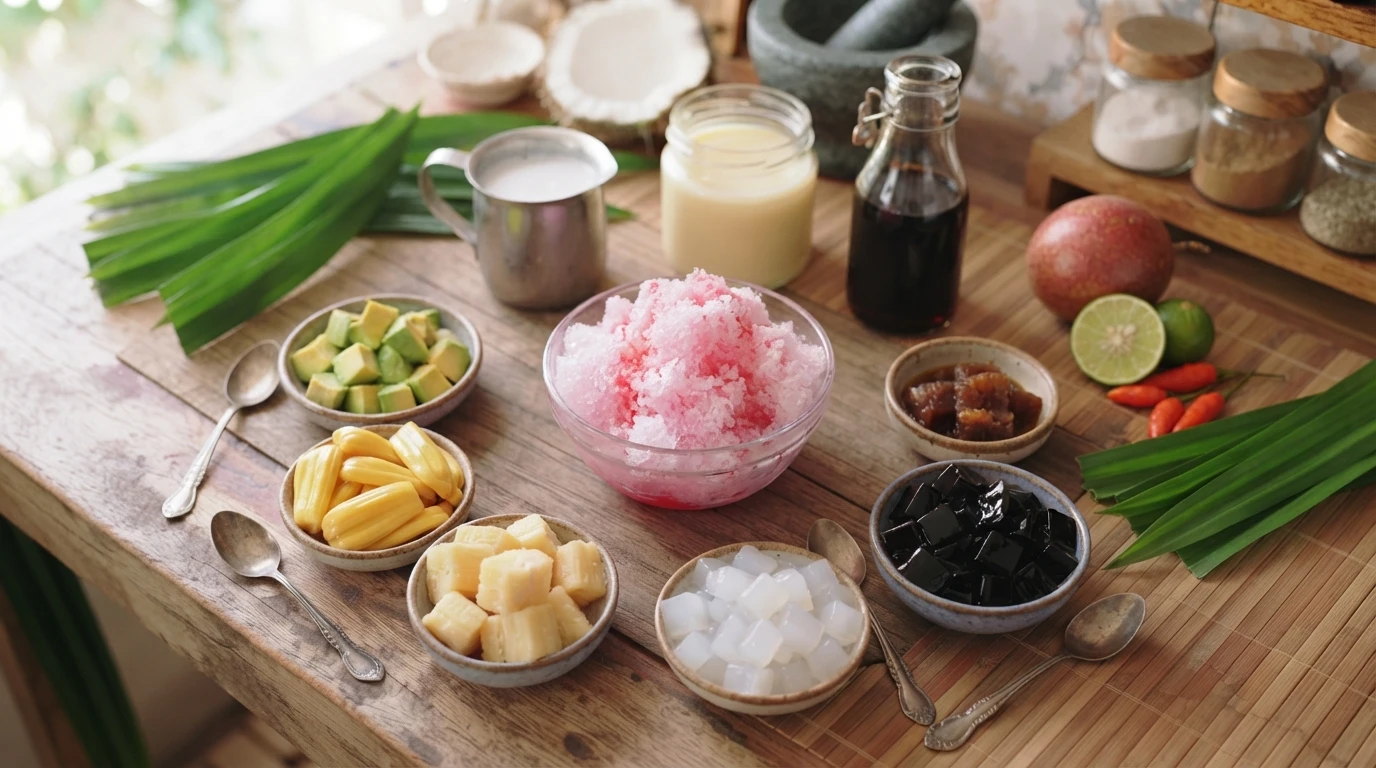
How to Make Es Doger Step-by-Step
One of the best things about Es Doger is that most of the work happens before you even assemble the dessert. Once every ingredient is prepared, putting everything together only takes a few minutes.
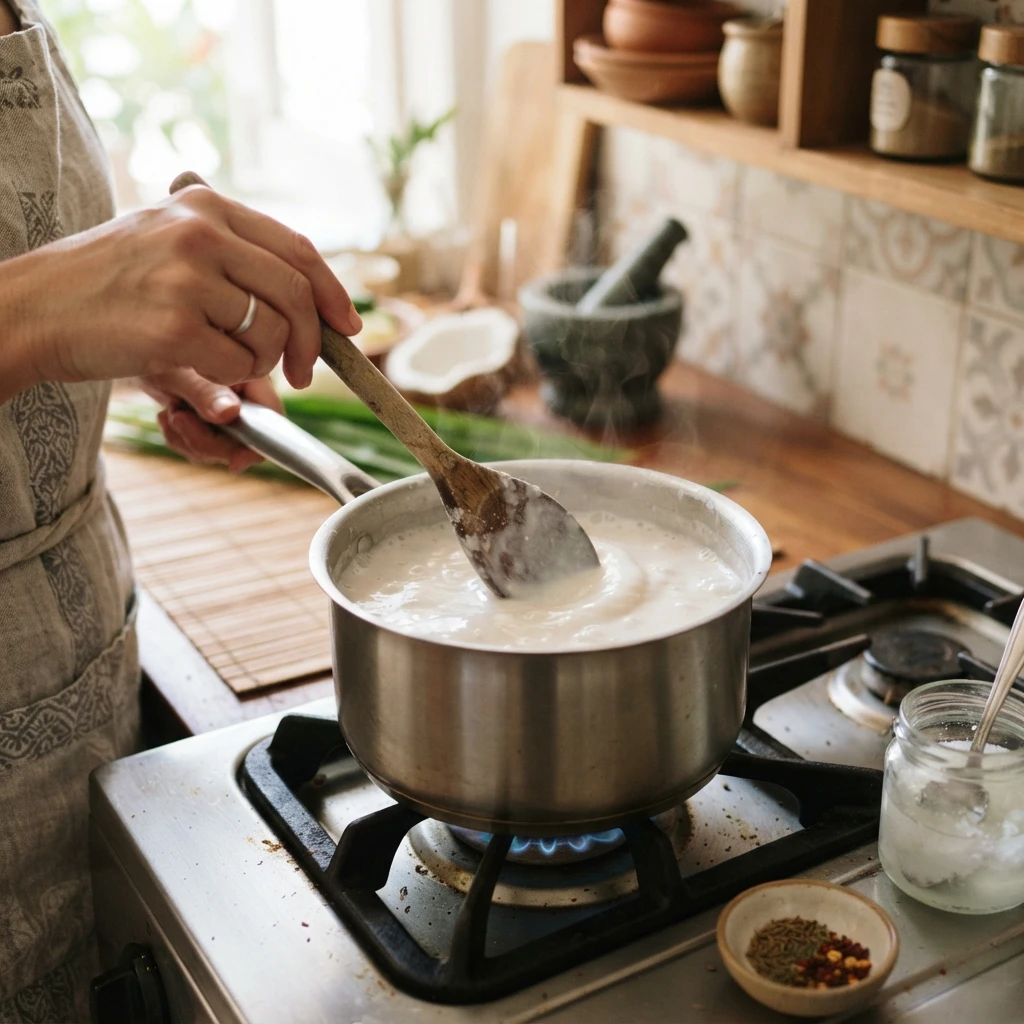
Step 1. Prepare the Creamy Coconut Milk Base
- Start by pouring the coconut milk and water into a medium saucepan.
- Add the sugar and a small pinch of salt, then stir gently over medium-low heat. Avoid letting the coconut milk boil vigorously because high heat can cause it to separate.
- Once the sugar has completely dissolved, stir in the sweetened condensed milk and vanilla extract if you’re using it.
- Continue stirring for another one to two minutes until everything becomes smooth and creamy.
- Remove the pan from the heat and let the mixture cool completely before refrigerating it for about 30 minutes.
A cold coconut milk base is the secret to making Es Doger taste extra refreshing instead of warm and heavy.
Step 2. Prepare All the Fresh Toppings
- While the coconut milk is cooling, prepare all the toppings.
- Dice the avocado into bite-sized cubes.
- Slice the jackfruit into thin strips.
- Cut the fermented cassava into small pieces.
- Drain the nata de coco or coconut jelly if needed, and cube the grass jelly if you’re using it.
- Arrange every topping in separate bowls. This not only keeps everything organized but also makes assembling much easier later.
Many Indonesian street vendors prepare all of their toppings ahead of time so each serving can be assembled in seconds.
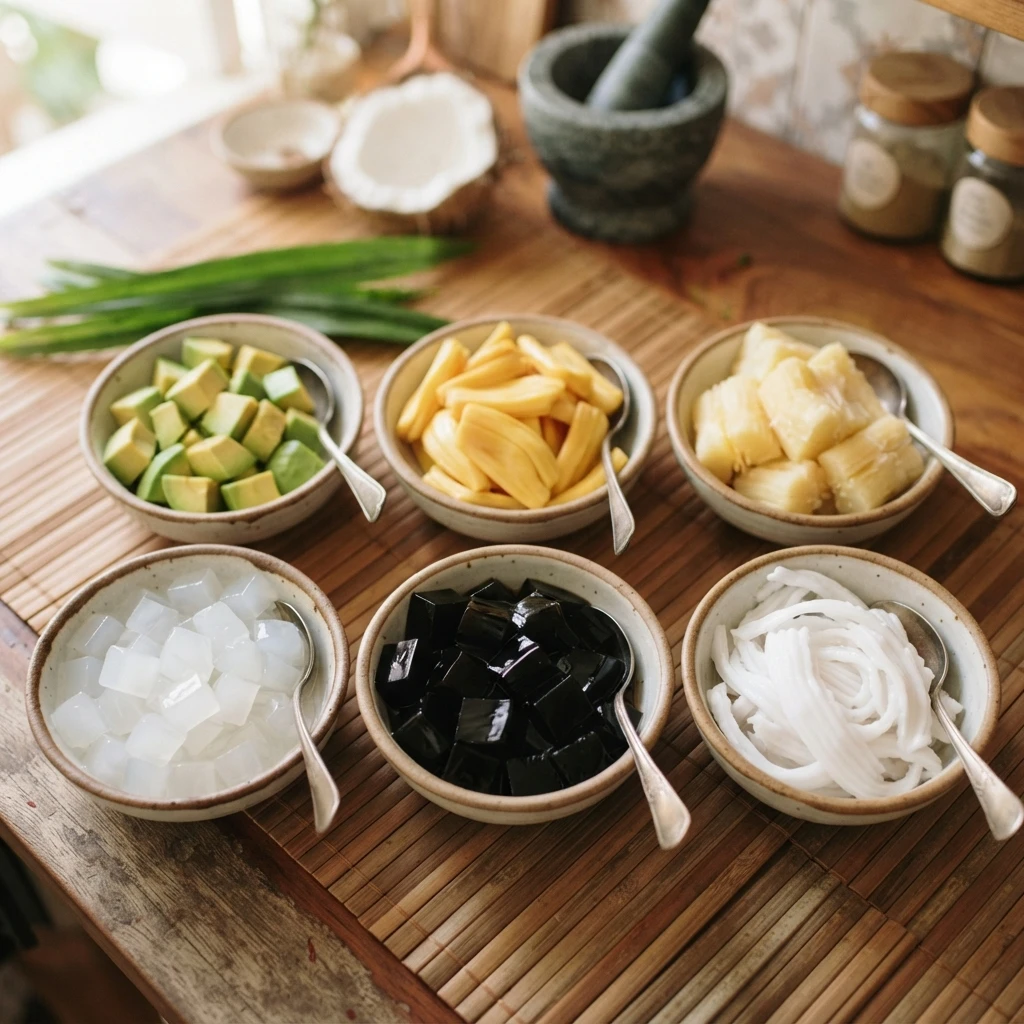
Step 3. Prepare the Shaved Ice
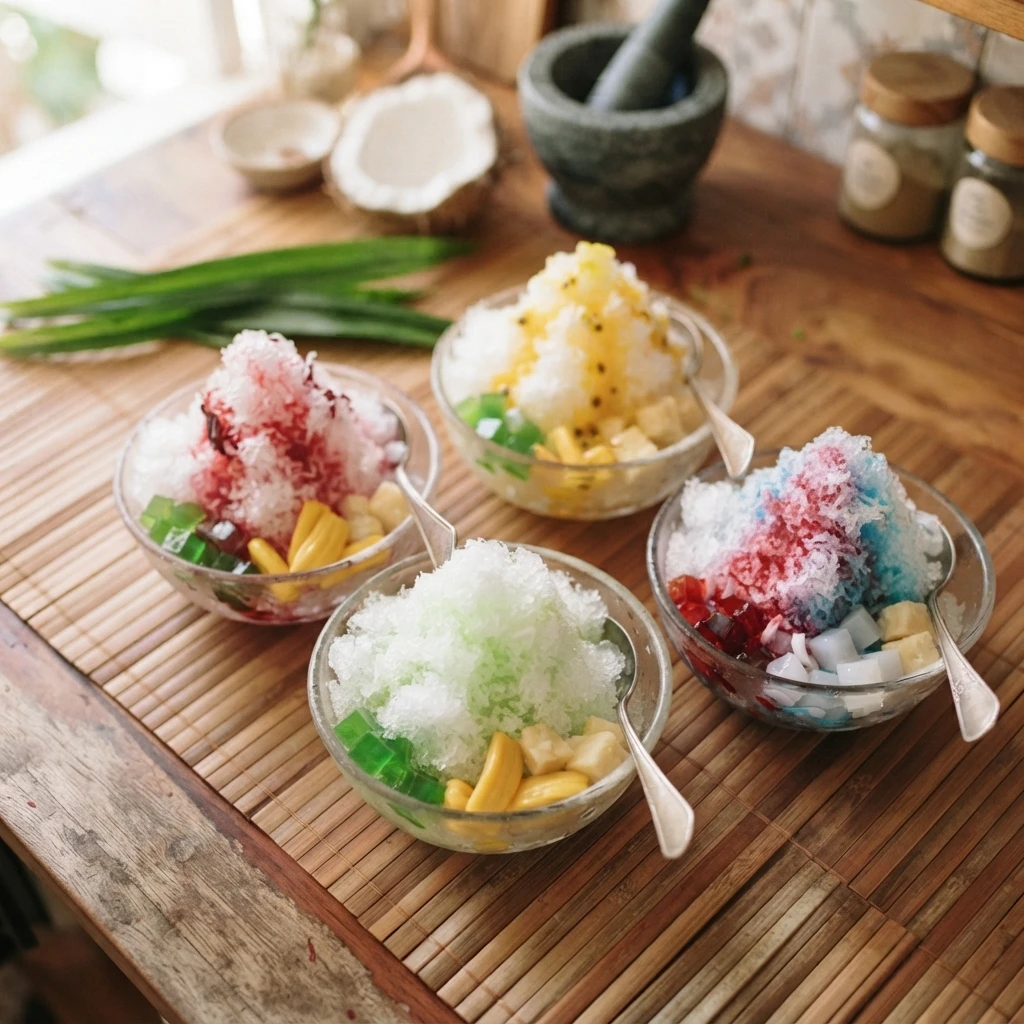
- Fill your serving bowls halfway with freshly shaved ice.
- If you don’t own an ice shaver, crushed ice works perfectly well.
- Try to avoid large ice chunks because smaller pieces absorb the coconut milk better and create a smoother eating experience.
- The ice should be light and fluffy rather than compact.
Step 4. Assemble the Es Doger
- Now comes the fun part.
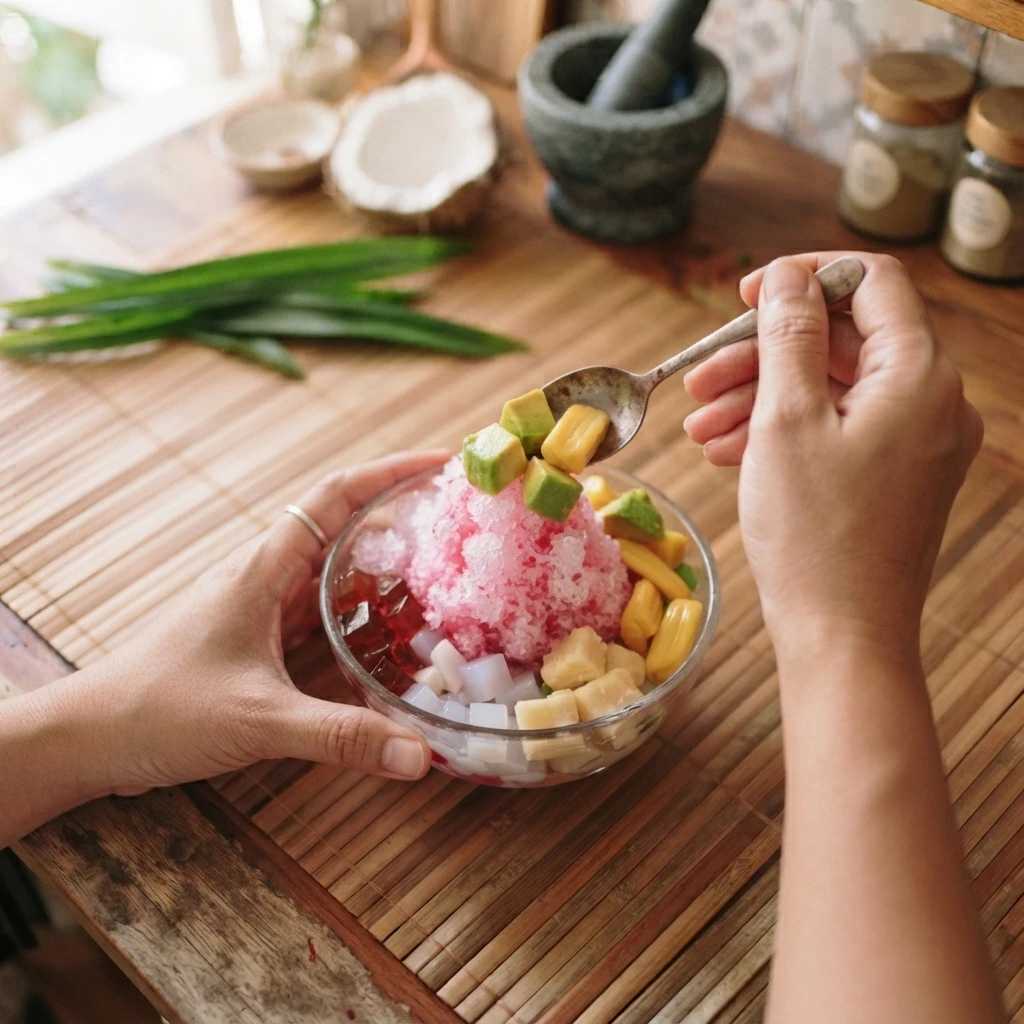
- Scatter the avocado, jackfruit, fermented cassava, nata de coco, and any additional toppings evenly over the shaved ice.
- Don’t worry about making everything perfectly symmetrical.
- Part of Es Doger’s charm comes from its colorful, slightly overflowing appearance.
- Every spoonful should contain a little bit of everything.
Step 5. Pour the Coconut Milk and Finish with Sweet Toppings
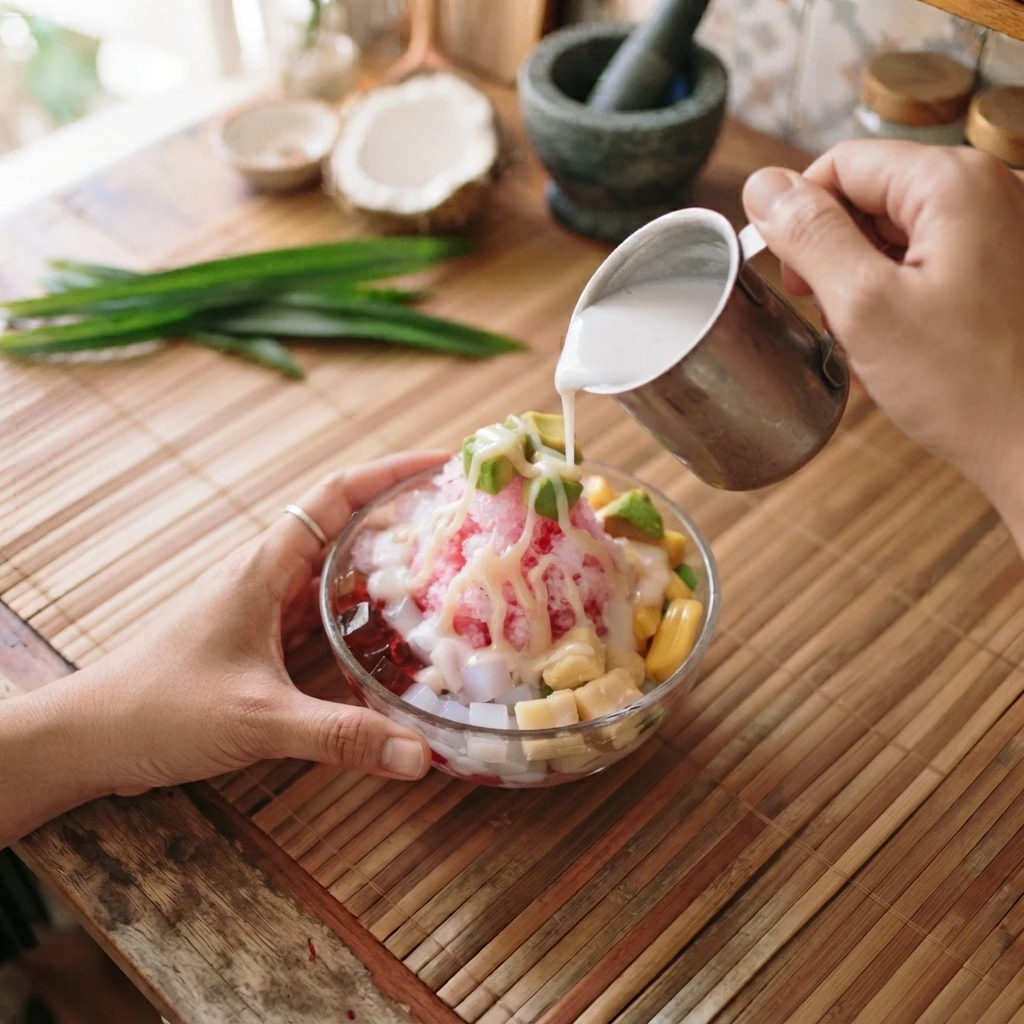
- Take the chilled coconut milk mixture from the refrigerator.
- Slowly pour it over the assembled dessert until the shaved ice is mostly covered.
- Finish by drizzling sweetened condensed milk over the top.
- If you want a more traditional Indonesian presentation, add a little palm sugar syrup or colorful rose syrup for extra sweetness and visual appeal.
- Serve immediately before the ice begins to melt.
The very first spoonful should combine creamy coconut milk, refreshing shaved ice, soft avocado, chewy jelly, fragrant jackfruit, and sweet cassava into one unforgettable bite.
Pro Tips
Making Es Doger is easy, but a few small details can turn a good dessert into one that tastes just like it came from a traditional Indonesian dessert stall.
- Chill Everything Before Serving: Cold coconut milk, chilled fruit, and icy shaved ice create the refreshing contrast that makes Es Doger so enjoyable.
- Use Full-Fat Coconut Milk: Full-fat coconut milk delivers a richer flavor and smoother texture than light coconut milk.
- Assemble at the Last Minute:Build each serving only when you’re ready to eat. This keeps the ice fluffy and prevents the toppings from becoming watery.
- Don’t Skip the Pinch of Salt: A tiny pinch of salt enhances the sweetness of the coconut milk and makes the overall flavor more balanced.
- Keep the Toppings Bite-Sized: Small, evenly cut pieces make every spoonful more enjoyable and ensure each bite includes a mix of textures.
- Taste Before Serving: Everyone has a different preference for sweetness. Adjust the condensed milk or syrup to suit your taste.
Es Doger Variations
One of the reasons Es Doger has remained popular for generations is that every family and every street vendor creates their own version.
Here are some delicious variations you can try.
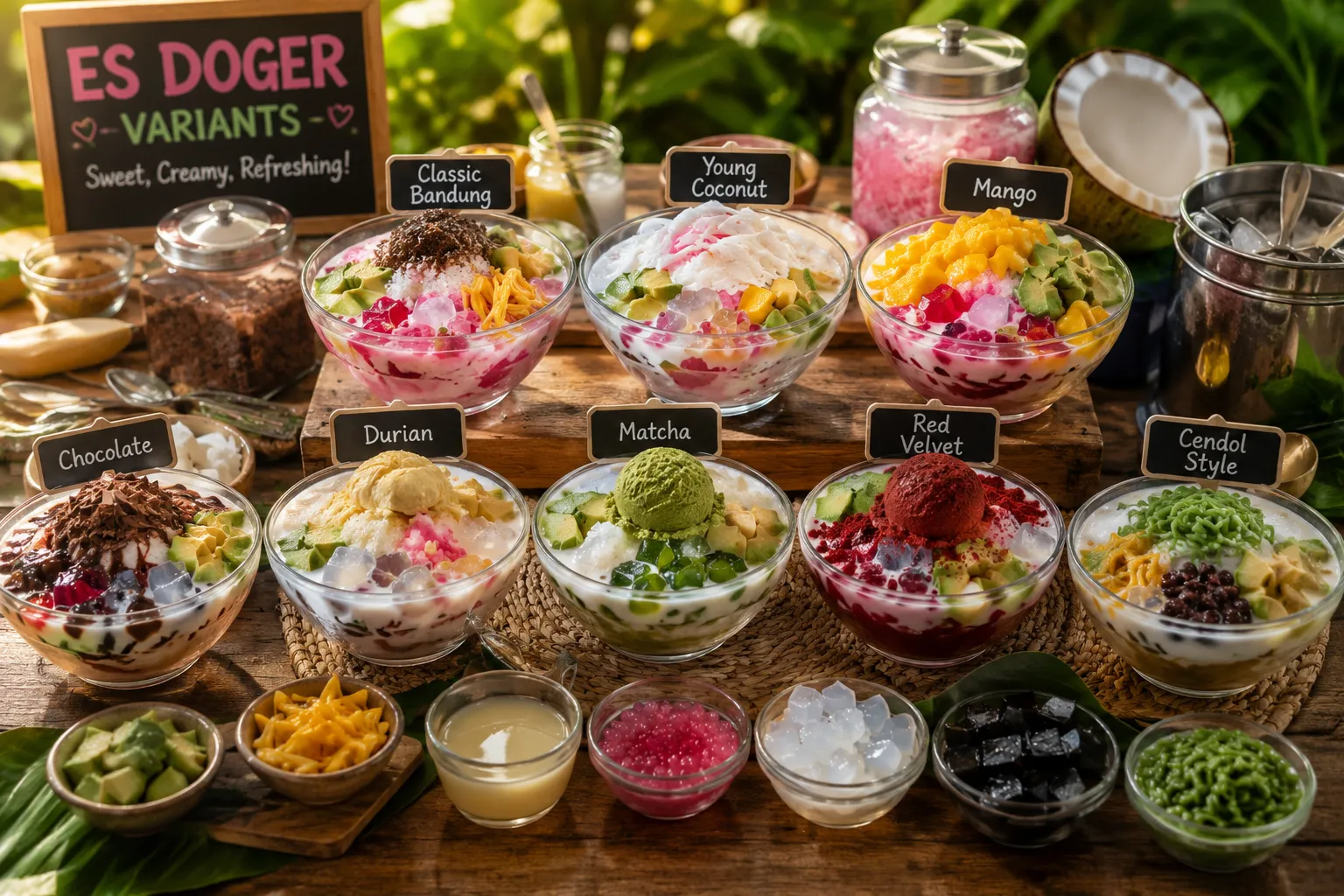
- Classic Bandung Style: The traditional version includes coconut milk, avocado, jackfruit, fermented cassava, nata de coco, shaved ice, condensed milk, and rose syrup.
- Young Coconut Es Doger: Replace the fermented cassava with fresh young coconut strips for a lighter tropical flavor.
- Mango Es Doger: Swap the jackfruit with ripe mango for a sweeter and fruitier dessert that’s easy to recreate outside Indonesia.
- Chocolate Es Doger:Drizzle chocolate syrup over the finished dessert for a fun fusion that’s especially popular with kids.
- Vegan Es Doger: Skip the sweetened condensed milk and replace it with coconut condensed milk or a homemade coconut syrup.
- Party Dessert Bar: Instead of assembling individual bowls, prepare all the toppings buffet-style so guests can create their own custom Es Doger combinations.
A Little History Behind Es Doger
Es Doger is more than just a refreshing dessert. It’s a small piece of Indonesia’s rich culinary heritage.
The dessert is believed to have originated in West Java, particularly around Bandung, where street vendors became known for serving bowls of colorful shaved ice topped with creamy coconut milk and tropical fruits.
Over time, each region added its own signature ingredients. Some versions include sticky rice, basil seeds, bread cubes, or colorful tapioca pearls, while others focus on fresh fruit and fermented cassava.
Today, Es Doger continues to evolve, proving that traditional recipes can adapt to modern tastes without losing their identity.
Its colorful presentation, refreshing flavor, and customizable toppings make it one of Indonesia’s most joyful desserts, whether enjoyed from a street cart in Bandung or recreated in a home kitchen halfway across the world.
Es Doger Nutrition Value
Estimated nutrition per serving. Actual values may vary depending on the toppings, syrup, and amount of condensed milk used.
| Nutrient | Amount (Approx.) |
|---|---|
| Calories | 320 kcal |
| Carbohydrates | 45 g |
| Protein | 4 g |
| Total Fat | 15 g |
| Saturated Fat | 11 g |
| Fiber | 5 g |
| Sugar | 28 g |
| Sodium | 120 mg |
| Potassium | 520 mg |
| Calcium | 90 mg |
| Vitamin C | 12 mg |
Good to know: Avocado contributes healthy fats and fiber, while coconut milk adds richness and minerals. If you’d like a lighter version, simply reduce the condensed milk or syrup.
FAQ About Es Doger
Can I make Es Doger without fermented cassava?
Absolutely. While fermented cassava (tapai) is traditional, you can replace it with young coconut strips, nata de coco, sweet potato cubes, or even extra fruit. The dessert will still taste refreshing and delicious.
Can I prepare Es Doger ahead of time?
Yes, but prepare the components separately. Keep the coconut milk mixture chilled, store the toppings in airtight containers, and shave the ice just before serving for the best texture.
What makes Es Doger different from halo-halo or bingsu?
Although all three are shaved ice desserts, Es Doger stands out because of its creamy coconut milk base and classic Indonesian toppings such as avocado, fermented cassava, and jackfruit, giving it a uniquely tropical character.
Can I use canned jackfruit?
Yes. Canned jackfruit works well if fresh jackfruit isn’t available. Just drain the syrup before using.
Common Mistakes
Even a simple dessert like Es Doger can lose its charm if a few small details are overlooked. Here are the most common mistakes and how to avoid them.
Using Warm Coconut Milk
Warm coconut milk melts the ice almost instantly, leaving you with a watery dessert. Always chill it thoroughly before serving.
Boiling the Coconut Milk
High heat can cause the coconut milk to separate or develop an oily texture. Heat it gently over low to medium heat and avoid bringing it to a full boil.
Using Large Ice Cubes
Large chunks of ice don’t absorb the creamy coconut milk well and make the dessert harder to eat. Fluffy shaved ice or finely crushed ice works much better.
Adding Too Much Syrup
It’s tempting to add extra syrup, but too much sweetness can overpower the natural flavor of the coconut milk and tropical fruits. Start with a little and add more only if needed.
Cutting the Fruit Too Large
Oversized fruit pieces make it difficult to enjoy a balanced bite. Aim for small, even pieces so every spoonful includes a mix of textures.
Preparing Everything Too Early
Assembling the dessert long before serving causes the ice to melt and the toppings to lose their freshness. Prepare the ingredients ahead of time, but build each bowl only when you’re ready to enjoy it.Using Warm Coconut Milk
Warm coconut milk melts the ice almost instantly, leaving you with a watery dessert. Always chill it thoroughly before serving.
Boiling the Coconut Milk
High heat can cause the coconut milk to separate or develop an oily texture. Heat it gently over low to medium heat and avoid bringing it to a full boil.
Using Large Ice Cubes
Large chunks of ice don’t absorb the creamy coconut milk well and make the dessert harder to eat. Fluffy shaved ice or finely crushed ice works much better.
Adding Too Much Syrup
It’s tempting to add extra syrup, but too much sweetness can overpower the natural flavor of the coconut milk and tropical fruits. Start with a little and add more only if needed.
Cutting the Fruit Too Large
Oversized fruit pieces make it difficult to enjoy a balanced bite. Aim for small, even pieces so every spoonful includes a mix of textures.
Preparing Everything Too Early
Assembling the dessert long before serving causes the ice to melt and the toppings to lose their freshness. Prepare the ingredients ahead of time, but build each bowl only when you’re ready to enjoy it.
How to Store Es Doger
Es Doger is best enjoyed fresh, but you can prepare its components in advance to save time.
- Coconut Milk Base: Store the chilled coconut milk mixture in an airtight container in the refrigerator for up to 3 days. Stir well before using, as natural separation may occur.
- Prepared Fruits and Toppings: Keep sliced fruits, nata de coco, grass jelly, and fermented cassava in separate airtight containers in the refrigerator for 1 to 2 days to maintain their freshness and texture.
- Shaved Ice: For the best experience, shave or crush the ice just before serving. Ice stored for too long tends to clump together and lose its light, fluffy texture.
- Assembled Es Doger: Once assembled, Es Doger should be eaten immediately. Freezing leftovers is not recommended, as the texture of the fruits, coconut milk, and ice changes significantly after thawing.

Final Thoughts
Es Doger is proof that some of the world’s most memorable desserts don’t rely on expensive ingredients or complicated techniques. Instead, they celebrate freshness, color, texture, and the joy of sharing something made with care.
With its creamy coconut milk, tropical fruits, and vibrant assortment of toppings, this Indonesian classic offers more than just relief from a hot day. It tells a story of local traditions, family gatherings, and the creativity of street food culture that has been passed down through generations.
The beauty of this recipe is that it’s easy to adapt wherever you live. Even if you can’t find every traditional ingredient, a few thoughtful substitutions can still capture the refreshing spirit of Es Doger.
So if you’re looking to explore Indonesian cuisine beyond the well-known savory dishes, this colorful dessert is the perfect place to begin. One bowl might be all it takes to discover a new favorite.
One of my favorite memories of es doger takes me back to the dry season when I was a child. After walking home from school under the blazing sun, my clothes would be damp with sweat by the time I reached the house. As soon as I walked into the kitchen, I would see my mother crushing a big block of ice, and I already knew what she was making. I would happily help her prepare the ice, then fill my bowl with all my favorite toppings before pouring over the sweet coconut milk. Sitting down to enjoy a big bowl of es doger with my family after such a hot day is a memory I’ll always treasure.
Have you ever tried Es Doger, or will this be your very first bowl?
I’d love to hear how you customized your version. Did you stick with the traditional toppings, or did you add your own creative twist?
Leave a comment below and share your favorite combination. If you enjoyed this recipe, don’t forget to share it with your friends and family so more people around the world can discover the refreshing taste of this beautiful Indonesian dessert.
Happy cooking, and enjoy every colorful spoonful!
Asian bread Breakfast cake Cheese Cold Dessert Detox Diet Dinner Drinks Easy food Halal Healthy homemade hot Indonesian Italian Japanese K-Food Low Calory Meal Noodle Omelette Pasta Popular Ramen Simple snacks Soup Street Food Sweet Thai Tiktok viral